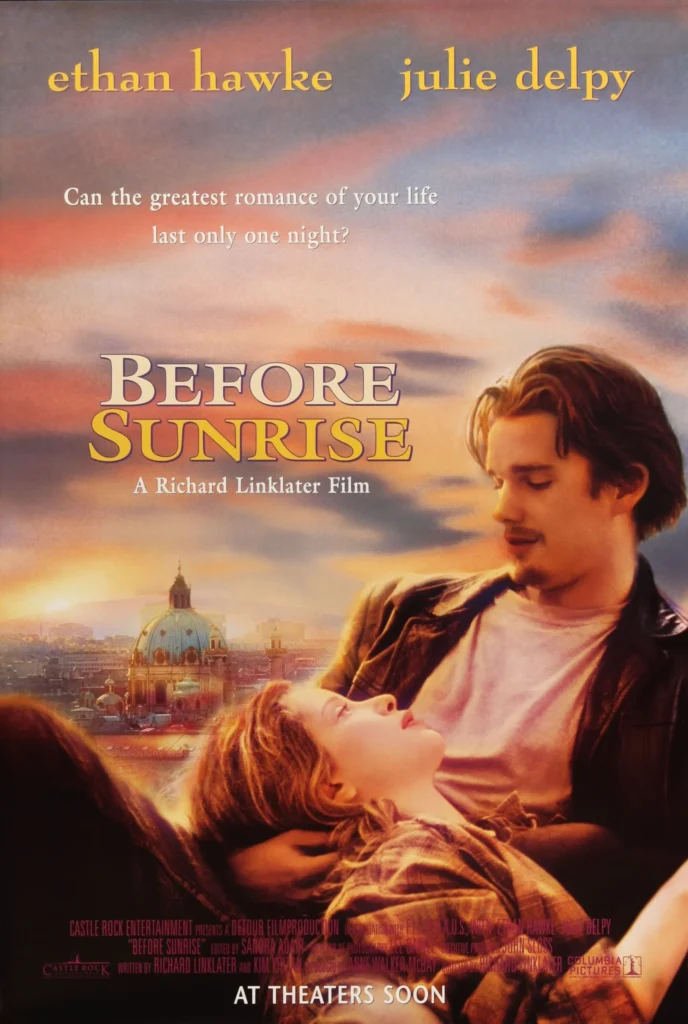
Recently, I’ve been on a binge. I’ve had a desire to watch simple, yet influential films. I can’t think of a better set of simple, yet influential films than Richard Linklater’s Before Trilogy. The first film in the series is 1995’s Before Sunrise. Before we go any further, I want to issue a formal spoiler alert.
Before Sunrise focuses on two young adults in their mid-twenties, American Jesse, and French Celine, who meet on a European train. After hitting it off, Jesse convinces Celine to spend the night walking around Vienna with him before he has to depart in the morning, hence the title. On the surface, the film doesn’t seem exciting; after all, it is an hour and forty minutes of mostly dialogue. However, the dialogue plays like poetry. Through the conversation, the two characters explore themes of romance, life, death, time, and disillusionment. I’ll be honest with you. Because so much of the film is dialogue, I’m not quite sure how to structure this post. I took notes as I rewatched the trilogy, so I’ll try to organize them into cohesive thoughts.
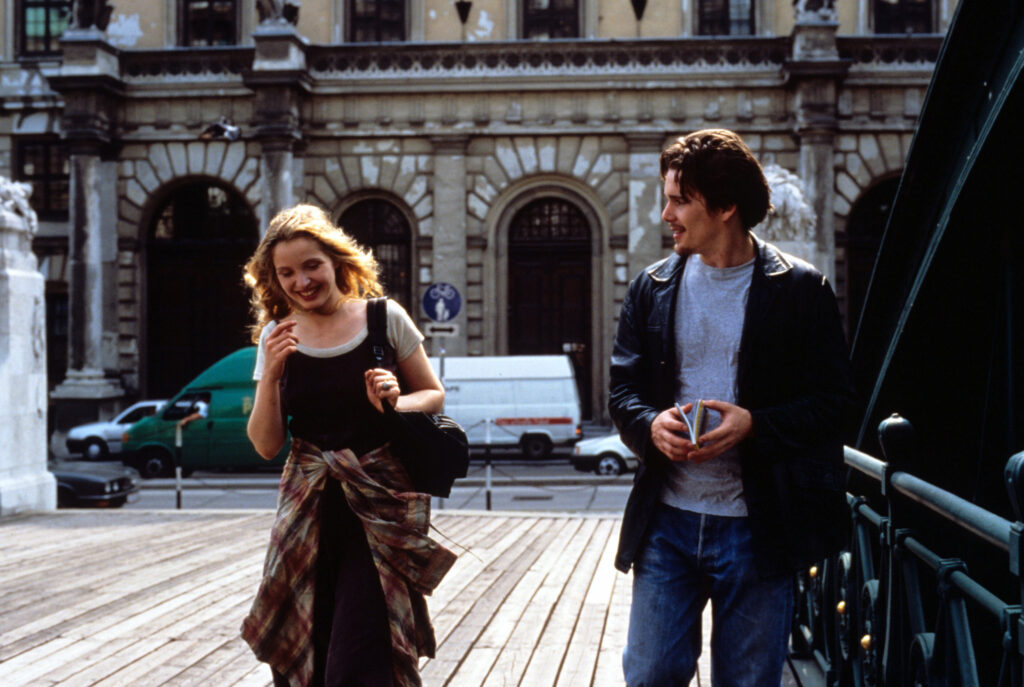
I should start with a little bit of history behind the production. The film was loosely inspired by an evening Richard Linklater had in real life. In 1989, he met a woman named Amy in a Philadelphia toy store, and they walked around the city, having conversations deep into the night. Like our protagonists, the two went their separate ways without exchanging info. That was the initial inspiration for the film. Unfortunately, Linklater learned in 2010 that Amy died in a motorcycle accident in 1994. Knowing he needed a strong female perspective, he brought in Kim Krizan, a young actress with bit parts in his earlier films Slacker and Dazed and Confused, to help him write the script. Before they got to the actual writing, they spent a long stretch of time developing the characters and outlining the film. This preparation allowed the actual screenplay to be written in just eleven days.
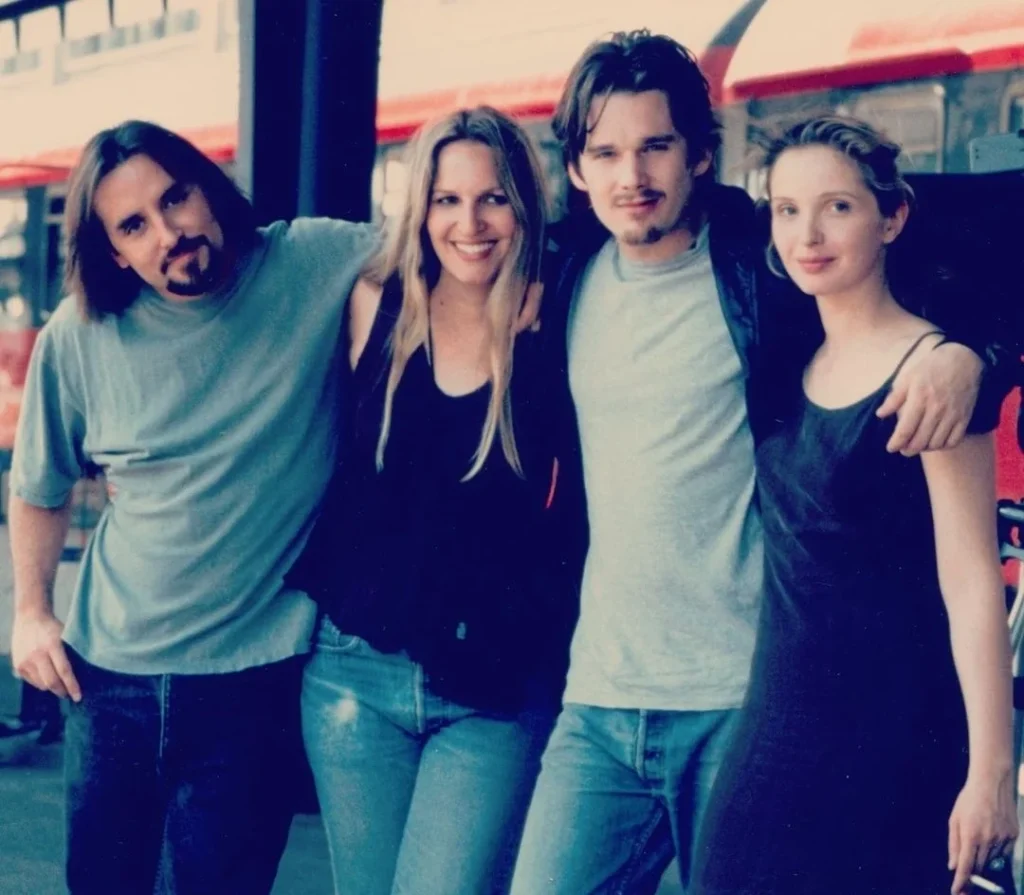
Casting was of the utmost importance. Linklater spent nine months casting the film to get the right people for his leads. This resulted in the casting of Ethan Hawke and Julie Delpy. Once cast, Hawke and Delpy went to Austin for a few days to further develop their characters with Linklater and Krizan. Allegedly, Julie Delpy and Ethan Hawke re-wrote the film considerably, although they did not receive credit. Krizan denies this claim, although Hawke and Delpy would receive screenwriting credit for the sequels.
I won’t dive too deep, as this isn’t a grad school analysis, but I want to touch on some of the themes depicted in this film. One of the main themes is the idea of love versus sex. Despite the two leads being in their mid-twenties, I do feel like love is a more prominent emotion in the film. The two characters hit it off on the train, but Jesse sells Celine on getting off the train by making her wonder. He tells her, Twenty years from now, you might be thinking about the one you could have gotten off the train with in Vienna. He compares him to the best thing that happened to her or to the other guys she has dated, but she won’t know unless she gives him a shot. Ultimately, she obliges.
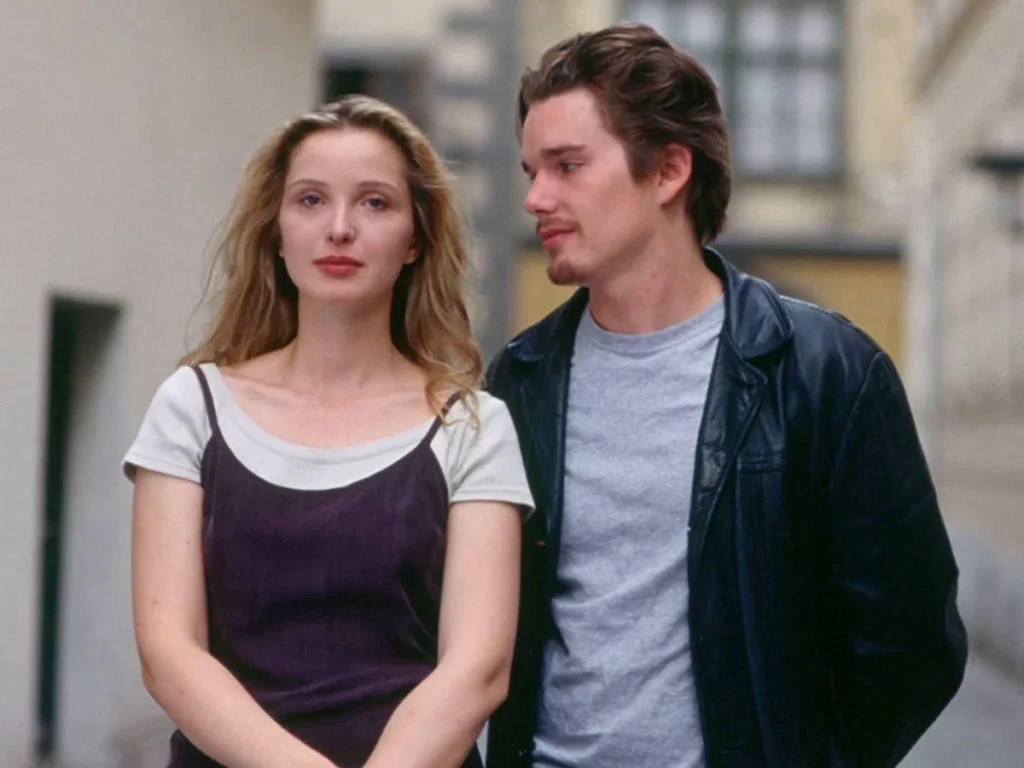
Each character has their own viewpoint on relationships, impacted by something from their youth. Jesse’s parents basically hated each other and got married because his mother was pregnant with him. They stayed together for the sake of Jesse and his sister. His father even makes a later comment that he never wanted Jesse to be born. Taking this lesson to heart, Jesse takes pride in the fact that his life is his own doing. Celine, however, thinks of her grandmother. Her grandparents were married for several years; however, on her deathbed, her grandmother made a shocking confession – she was in love with a different man almost all of her life. The sex talk is so casual, nothing too profound. It’s interesting because once they realize they probably won’t see each other again, the pressure to sleep together intensifies. Although they both want it and have the opportunity, Celine is against it. She doesn’t want to be another notch on Jesse’s belt. More importantly, she worries that sex would dilute the evening and how much they have come to know each other. While lying on the grass in the park, drinking wine, they reflect on their future. If they were together in twenty years, Jesse is insistent that she would hate him, and the feeling might be reciprocal. Celine disagrees. She feels that she will fall in love with someone once she knows all of his mannerisms and behaviors.
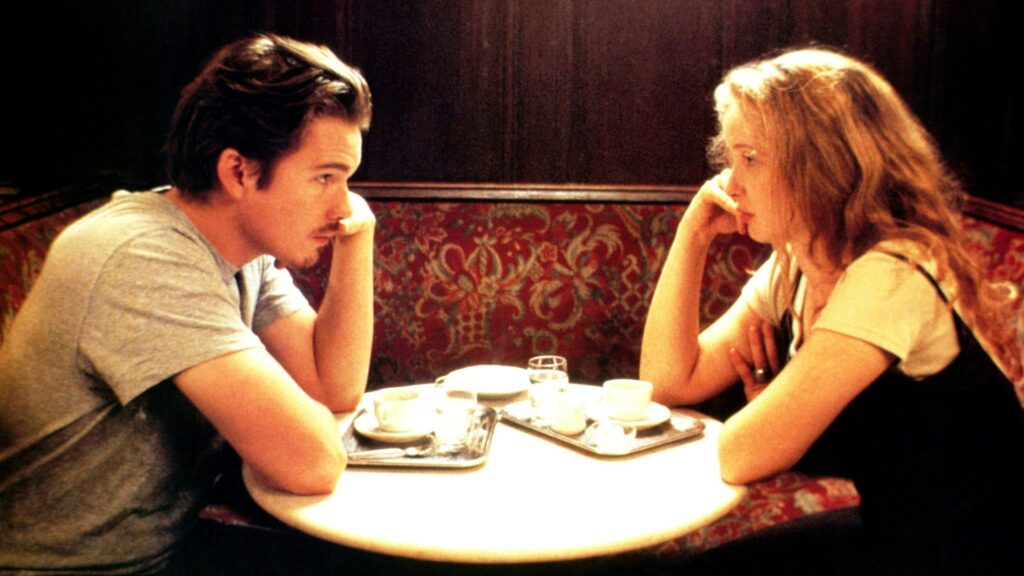
The most telling scene about love may occur at the bar. Both Celine and Jesse, over a game of pinball, get honest with each other. Celine reveals that her boyfriend broke up with her because she “loved him too much.” Playing off of her vulnerability, Jesse confesses. He flew to Madrid to surprise his girlfriend, who is studying abroad. It becomes clear that things are not the same, and she breaks up with him. He tells Celine that he found the cheapest flight out of Europe, but it didn’t leave for two weeks, so he purchased a Eurail pass and traveled around the continent. They talk about the pain of getting broken up with. It’s basically an ego check. Jesse asks Celine, “You know how little you think of someone when you break up with them?” She nods. “Well, it’s hard to realize that someone thinks that little of you when they break up with you.” Celine asks him, “Isn’t everything we do in life a way of feeling loved?” It’s a powerful thought. I should also mention that this scene is perfectly choreographed at a pinball machine. One plays the machine until they lose, trading off with the next person until they fail. This whole conversation goes back and forth as they alternate playing the pinball machine while having these deep conversations.
Both characters have distinct personalities that shape their outlook on life. While Jesse is more of a cynic, Celine is more of an optimist. These traits, no doubt, were formed through their upbringing. Celine comes from an affluent family, and although her parents loved each other, things were far from perfect. There was always conflict within the marriage, but Celine doesn’t believe conflict is all that bad. She tells Jesse that there are good things that come from conflict.
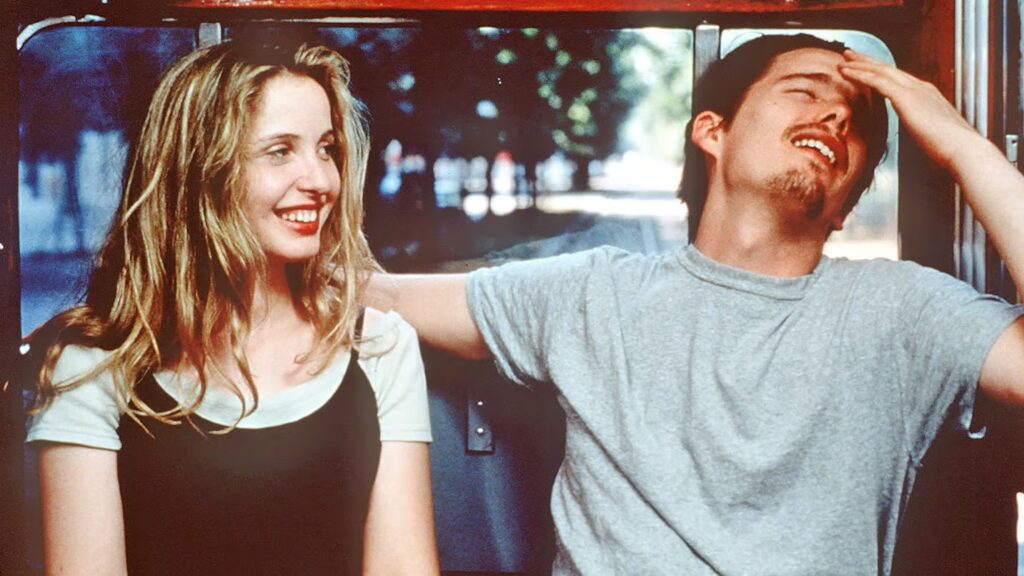
Additionally, Celine’s father, in particular, wants his daughter to have a good job. For instance, she tells Jesse that when she tried to be a writer, he encouraged her to be a journalist. When she wanted to be an actress, he suggested a newscaster. Like many parents, he worries about making money with the artistic side. Knowing that his parents never wanted him, he tells Celine he feels like he’s crashing a party. There are a couple of other moments that demonstrate the difference in characters. When approached by the palm reader, Celine allows the woman to read her palms and then pays her. Jesse not only thinks it’s all bullshit but calls Celine out for getting scammed. Later, they walk past a struggling artist who offers to write them a poem on the spot, incorporating a word of their choosing, for money. Celine selects “milkshake.” After a few minutes, he returns with a well-written poem that includes the word “milkshake”. Celine is impressed and pays him. Jesse is convinced that the “Viennese bum” already has the poem written and just inserts the word.
Just as important as their outlooks on life is their outlook on death. Celine, like many, is afraid of death. That’s why she’s on a train instead of a plane. Jesse, on the other hand, isn’t scared. He thinks death is calm and natural. He brings up a story that, I have no doubt, impacted his viewpoint. When he was little, his sister showed him how to block part of the water hose with his thumb to create a rainbow. One afternoon, he was doing just that, and he claims to have seen his great-grandma. When he tells his parents this, they don’t believe him, reminding him that she just died. Despite this, he knows what he saw and sticks by it all of these years later.
There were some other miscellaneous notes I took that didn’t have a natural spot in this post, so I’ll put them here. This is my hodgepodge paragraph, if you will. Both love art and hope to pursue it as a career. They debate, isn’t part of art giving yourself to something greater? On the subject of time, Celine tells Jesse that everything is so finite, making specific times and events all the more critical. There’s a scene where Celine and Jess end up at a cathedral. Neither one is particularly religious; however, Celine can’t help but think of her grandmother, the one in love with a different man. Despite this, she also feels for people like her grandmother who come to the cathedral lost, looking for help. I also thought the way Jesse and Celine look at each other and how they feel internally was quite distinctive. Celine tells Jesse that she imagines herself as an old lady looking back on her life. Jesse, on the other hand, is a thirteen-year-old stuck, not knowing how to become an adult. Celine jokes that their relationship is like an older woman and a thirteen-year-old inside.
The film has a few iconic moments. The one that pops into my head is in the bar, where each pretends to be calling their friend to inform them of what happened. It starts with Celine, picking up her fingers and mimicking a phone, “ring ring.” Jesse picks up the “phone,” and she tells her “friend” that she won’t make it for lunch, because she met a guy and got off the train in Vienna. He responds, “Are you crazy?” She tells her “friend” how attractive Jesse is and how she loves his soul. She saw him on the train and hoped he would move and talk to her, which, of course, he did. She was willing to get off the train with him already, should he ask, but the story of seeing his great-grandmother’s ghost in the mist as a child sealed the deal. Jesse then calls his “friend” and describes how beautiful Celine was, and says he knew he would have spent his life regretting it if he hadn’t asked her to get off the train. Even if she said no, he would have been content. Jesse also uses this moment to reveal his anxieties about going home after his breakup. Overall, this scene is a fun, yet clever way for the two to discuss their insecurities and feelings towards one another.
The final scenes are bittersweet. About an hour and fifteen minutes into the movie, the characters decide that for the sake of having a perfect night, they won’t keep in touch. As audience members, we realize that, and it leaves us with a sense of a ticking clock. When their time is finally up, and they do arrive at the train station, it’s tough. In a poignant scene, both Jesse and Celine take mental photos of each other. The goodbye scene is excruciating. Both characters struggle to say what they really want. It’s been an evening that neither one of them will forget. As the train approaches departure, they realize they want to keep in touch. They decide to meet in six months at this same station on December 16. They quickly agree as Celine gets on the train, so as not to miss it. Linklater than cuts to each of the spots Celine and Jesse spent time at the previous night. However, they are mostly empty in daylight. The final shots are effective. Jesse is on a shuttle bound for the airport, and Celine is on the train. They both spend a few moments, deep in thought, reminiscing about the evening before. Finally, they each look up and smile. They’re not large smiles. They are subtle, perfect smiles to end the film.
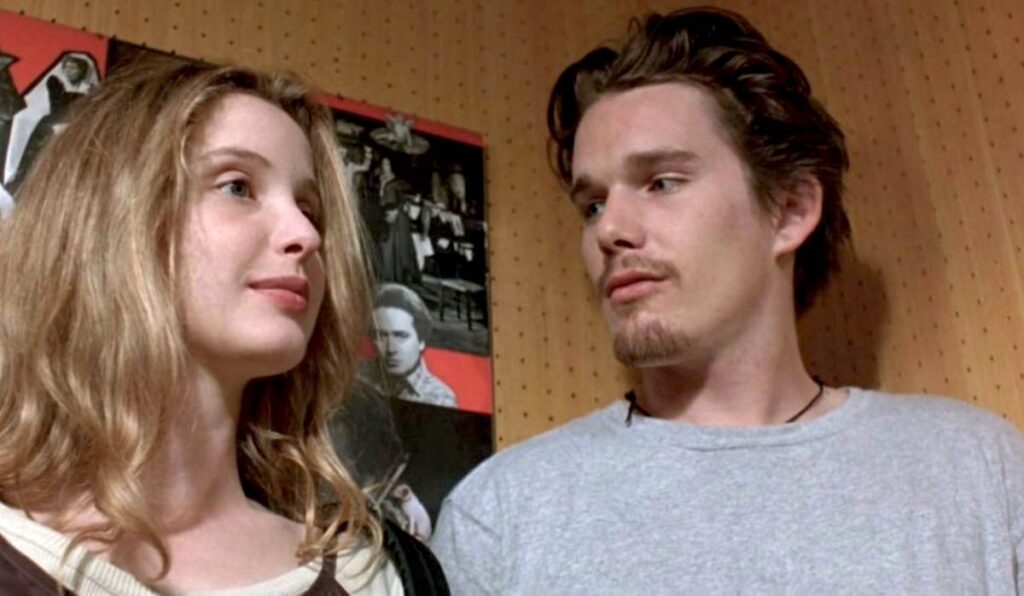
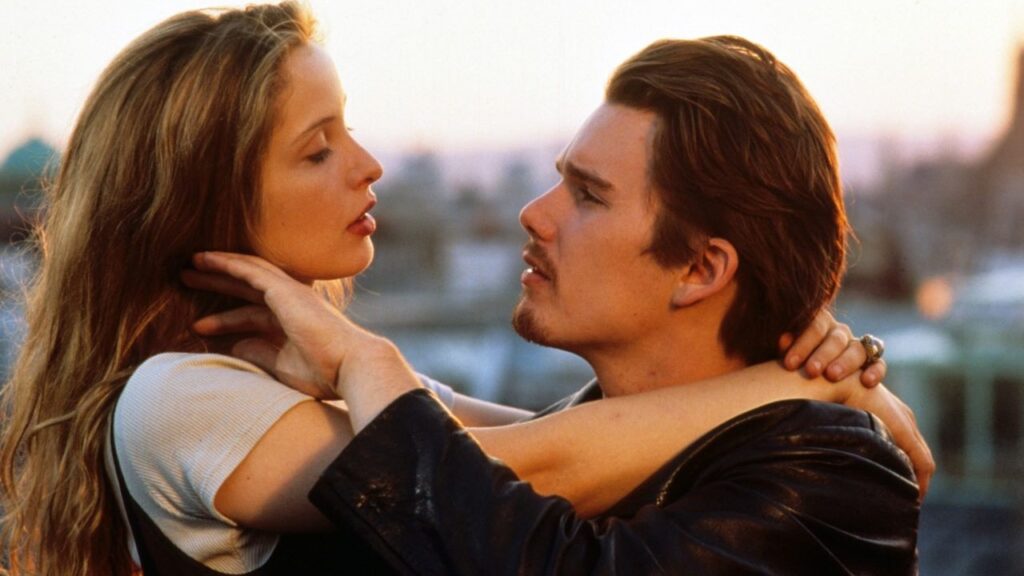
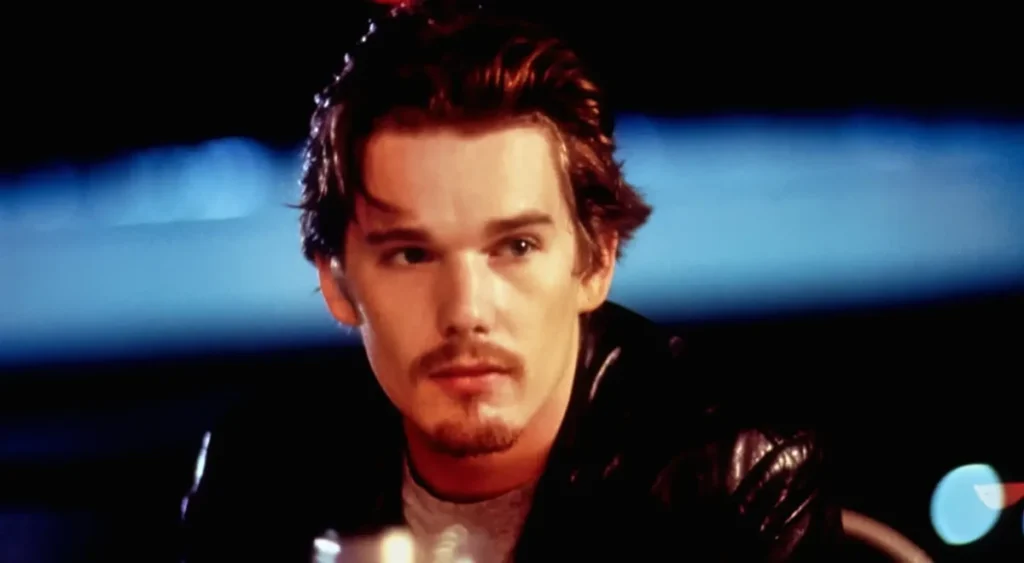
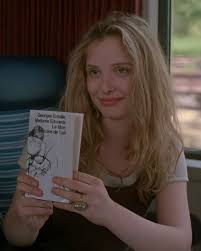
Yes, the film is simplistic, but it’s oh-so-enjoyable. It’s a treat to watch these characters fall in love over one night. I would be remiss if I didn’t talk about the wardrobe. Julie Delpy looks a bit innocent, but so beautiful. Hawke, sporting a leather jacket, perfect hair, and a small goatee, looks like a badass. I think these looks deceive the audience. You might never guess that Celine is so worldly and intelligent, or that Jesse is so philosophical and wise.
The film had its world premiere at the 1995 Sundance Film Festival before being released in the United States at the end of January. Upon its release, the film earned overwhelmingly positive reviews. It’s one of the few films to hold a perfect score on Rotten Tomatoes. Despite the strong reviews, the film wasn’t nominated for any major awards, something I think is unjust. It ended up grossing $22.5 million worldwide, nine times its $2.5 million budget. This small, intimate, walk-and-talk film wouldn’t seem like the start of a franchise, but thankfully, it was. Although it took nine years, the film spawned two sequels, Before Sunset and Before Midnight, released in 2004 and 2013, respectively. Up next in the series is my retrospective on Before Sunset.