Today we’re talking about what I believe is one of the greatest action franchises of all time: John Wick. Spoiler alerts are possible — you’ve been warned.
John Wick (2014)
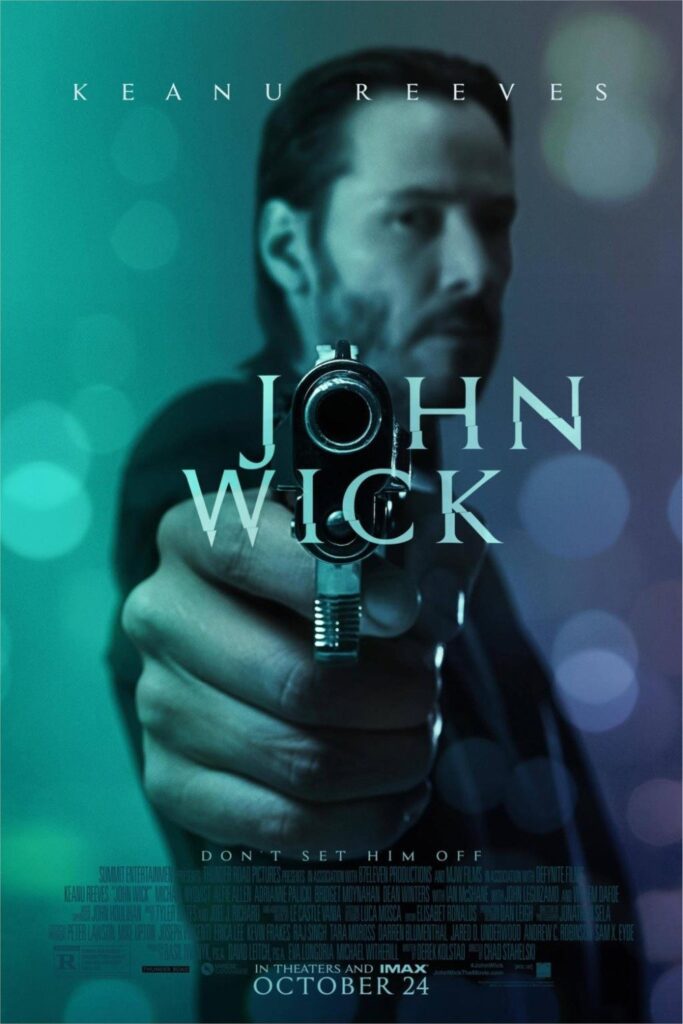
Let’s begin with the first film in this unlikely action franchise. I use the word unlikely because I don’t think anyone — including the people who made it — expected this $25 million revenge flick to launch an epic series that would gross nearly $500 million. The plot follows John Wick, a grieving widower who receives a posthumous gift from his late wife: a beagle puppy. The dog helps him begin to heal. One day, while driving his 1969 Mustang with the puppy in tow, John is approached by Iosef Tarasov (Alfie Allen), a young punk who wants to buy the car. When John refuses, Iosef and his thugs break into his house later that night, steal the car, and kill the dog — not realizing John is a retired assassin who used to work for Iosef’s father, Viggo (Michael Nyqvist), a powerful Russian crime boss. That single act sets off a bloody chain of events fueled by John’s desire for vengeance.
A lot of people helped bring John Wick to life, but it all started with screenwriter Derek Kolstad. Like many writers, Kolstad struggled for years, churning out up to eight screenplays a year without success. Discouraged, he gave up writing full-time until his wife convinced him to try again. After writing 60 scripts, he finally got some traction with low-budget thrillers like One in the Chamber and The Package (both starring Dolph Lundgren). Feeling inspired after watching two particularly bad revenge movies, Kolstad cranked out a spec script in just four days in 2012. The result: Scorn.
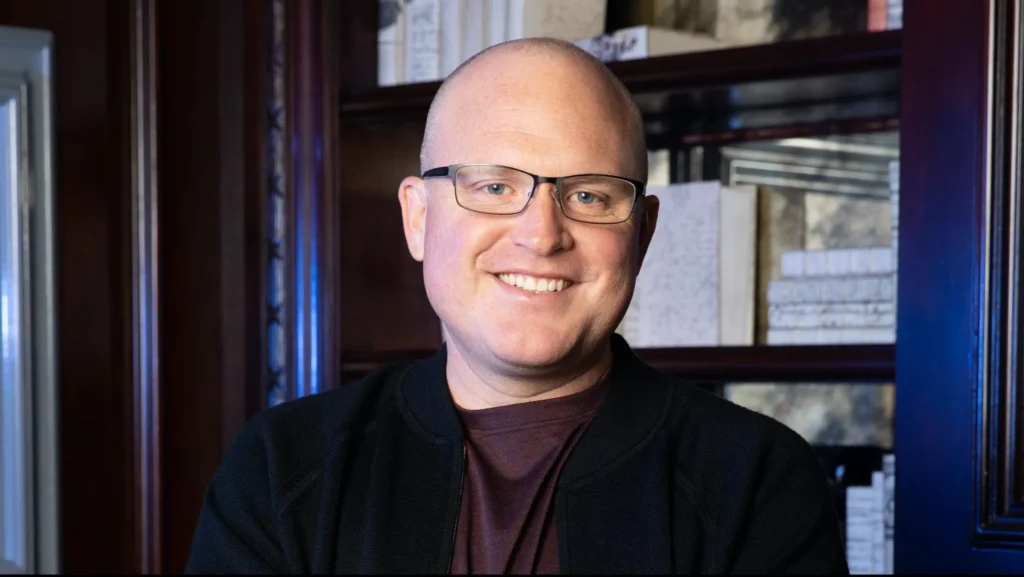
Scorn featured a John Wick who was in his 70s — more Paul Newman or Clint Eastwood than Keanu Reeves. He was a long-retired assassin whose legendary exploits were treated like myths by the new generation. Many core elements were already there: the late wife, the puppy, the Continental, Winston, Charon, and the gold coins. The initial body count was a modest 11 (compared to the dozens seen in the final film). Kolstad focused most of his effort on writing a strong first act. He intentionally avoided clichés like a murdered wife and instead used the killing of the dog to drive John back into the life he left behind. He added dark humor and levity to balance the tone. After a round of revisions, the script went to market.
If you’re unfamiliar with the term “spec script,” here’s a quick explanation. Scripts are either written on assignment or on spec. When a writer is hired to develop a script for a studio, that’s an assignment — they’re paid to write a script the studio owns. A spec script (short for “speculative”) is written on the writer’s own time with the hope of selling it later — no guarantee, no contract, just passion and risk.
Spec sales still happen today, but not like they used to. Back in the ‘80s and ‘90s, writers like Shane Black were getting million-dollar spec sales (Lethal Weapon was the first to break $1M). Notable examples include The Long Kiss Goodnight ($4M), Medicine Man ($3M), and Basic Instinct ($3M). In today’s IP-driven market, those numbers are rare — but they’re not extinct.
Once the script hit the market, Basil Iwanyk of Thunder Road Pictures took interest. At the time, he was frustrated working under the constraints of Warner Bros. and wanted more creative freedom. He was drawn to Scorn for its tone and emotional core. After some convincing, Kolstad signed with Thunder Road, and Iwanyk brought in co-producer Erica Lee to help shape the project. Though the script originally called for an older lead, they began searching for the right actor, not just an age match.
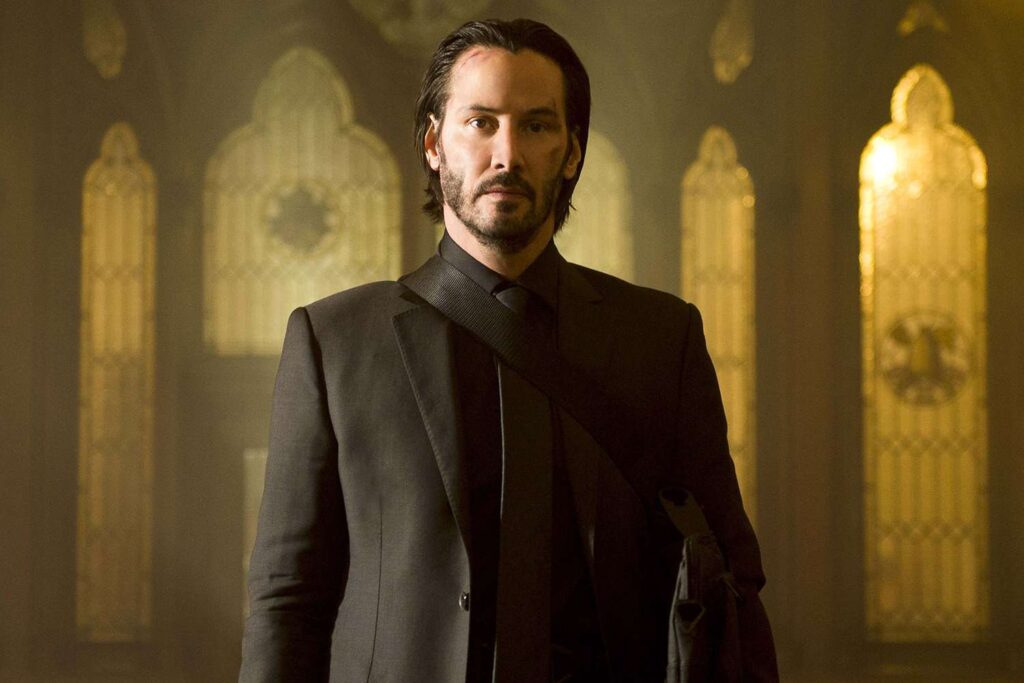
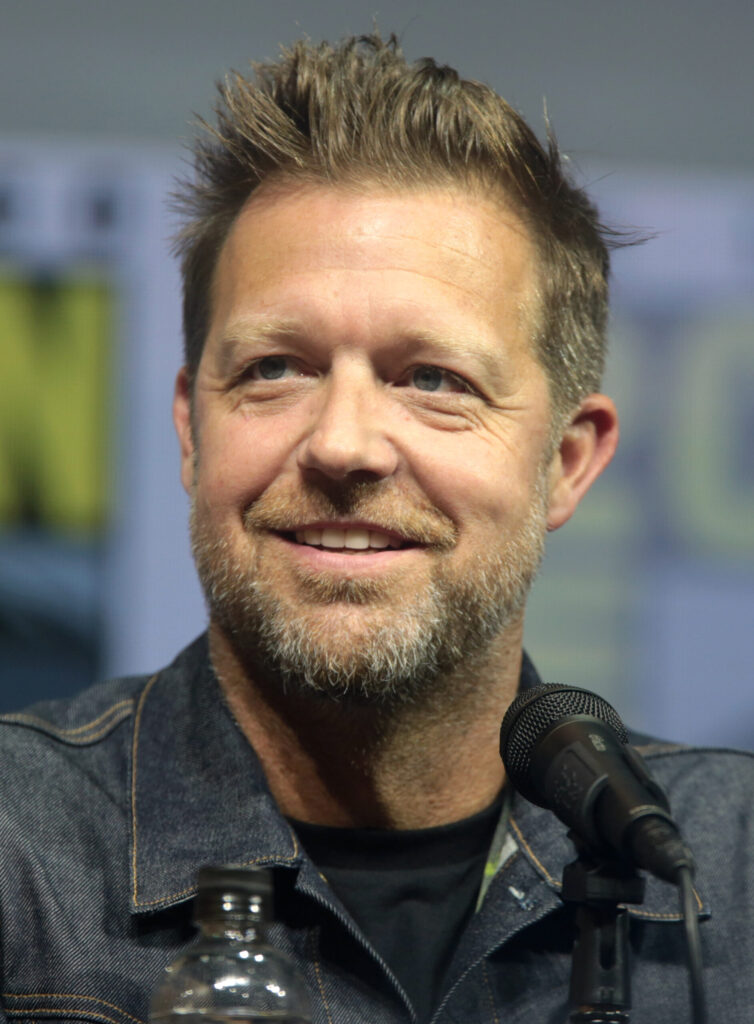
Enter Keanu Reeves. His career had hit a bit of a lull, but his manager had read the script and shared it with him. Keanu was intrigued by the underworld themes and emotional motivations. Around this time, Reeves introduced the script to two trusted collaborators: Chad Stahelski and David Leitch, former stuntmen and coordinators he had worked with on The Matrix and The Replacements. They had since launched their own stunt company, 87Eleven (now 87North). Reeves pitched them as choreographers — but after reading the script, they wanted to direct the whole film. With Reeves’ backing, they pitched their vision: a gritty assassin thriller set in a heightened, mythic world. The producers agreed. Reeves and Kolstad then spent two months reshaping John’s character to better suit Reeves’ strengths, trimming dialogue and sharpening the tone.
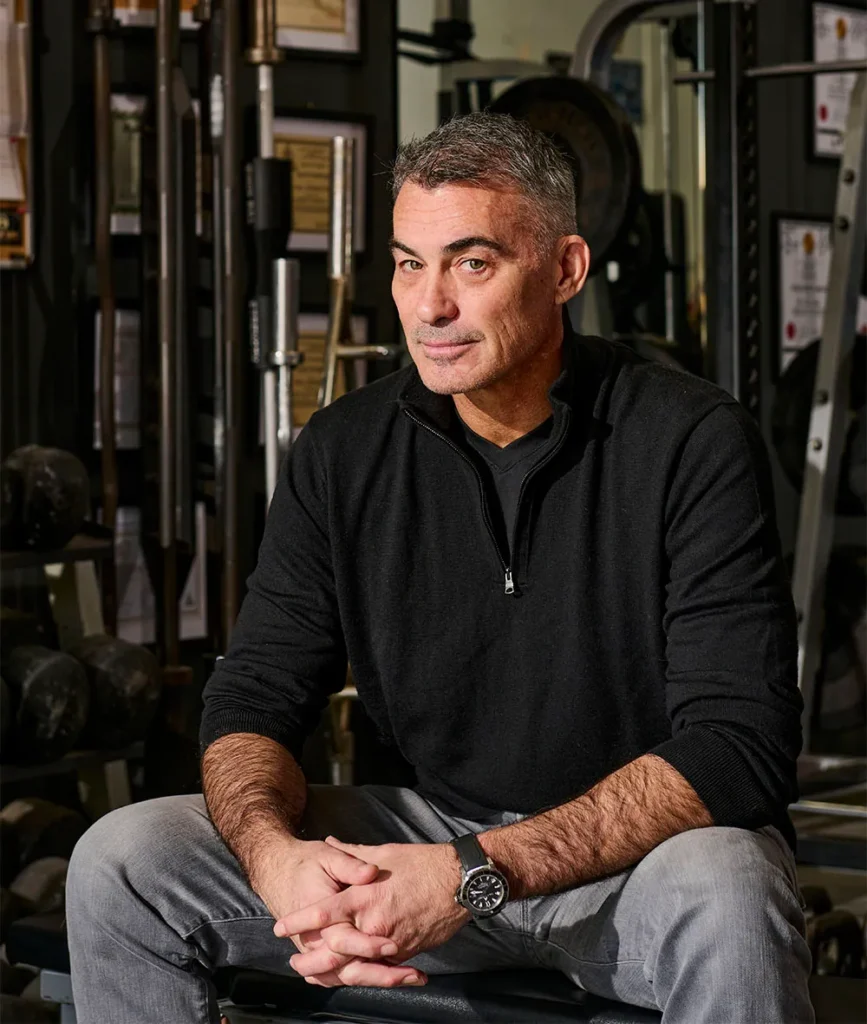
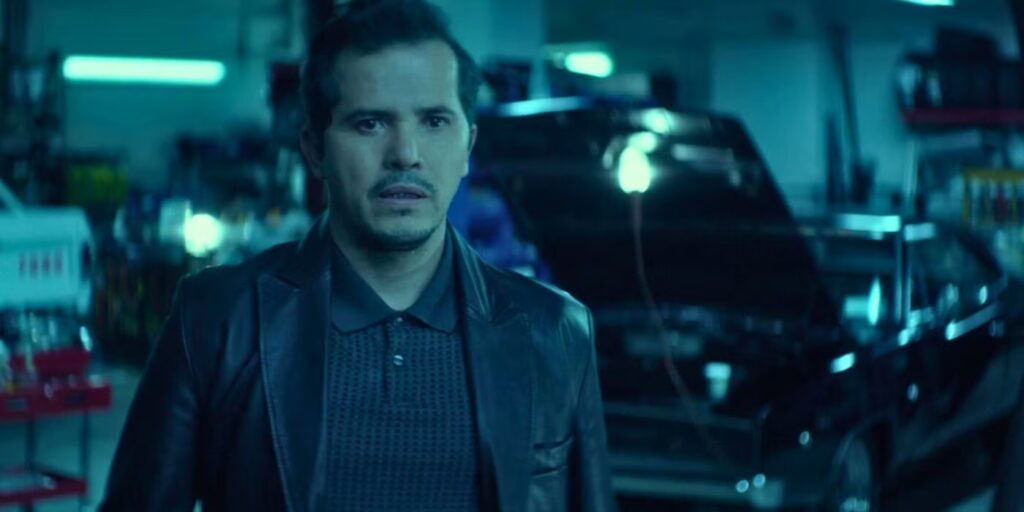
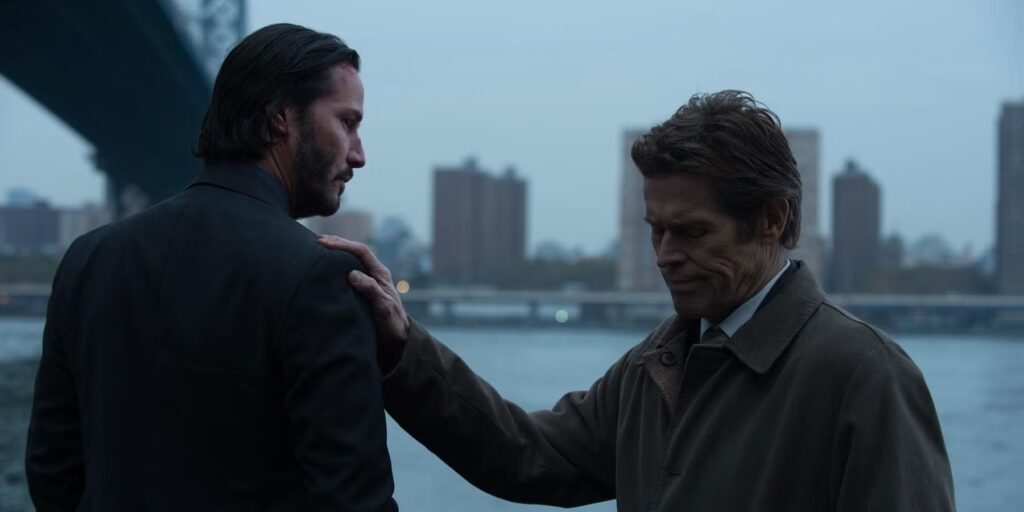
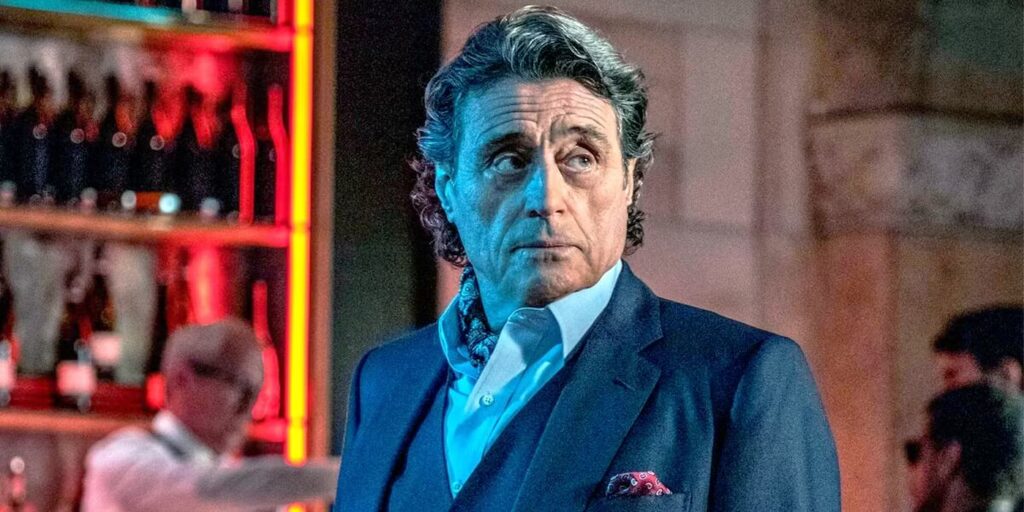
Filming was scheduled for October 2013. The cast quickly rounded out with Ian McShane, Willem Dafoe, John Leguizamo, and Michael Nyqvist. The role of Perkins was originally written for a man, but was reimagined after Adrianne Palicki was cast. Many actors brought their own flair to their roles — Nyqvist trained in Russian martial arts, Leguizamo used his wardrobe to channel swagger, and Bridget Moynahan, who plays John’s wife in flashbacks, refused to read the full script to stay emotionally in character.
But just before production, the film almost collapsed. Financing was shaky, and Iwanyk nearly pulled the plug. He deferred his own salary, loaned his personal credit card to the costume designer, and weathered a two-week delay — which he called the most stressful of his life. Eventually, funds came through, largely thanks to Michael Witherill of MJW Films and (surprisingly) Eva Longoria. Reeves even contributed money to keep the production afloat. Filming lasted from October to December and was plagued by cold nights and limited daylight. Still, Stahelski and Leitch remained meticulous — even tracking the exact bullet counts for each weapon.
Editor Elísabet Ronaldsdóttir, known for indie dramas, was hired in part because she disliked chaotic action editing. With no budget for reshoots, she made do with what she had — trimming dialogue, tightening fights (especially to reduce violence against women), and delivering a sharp 101-minute cut after Iwanyk disliked the longer version. Stahelski emphasized integrating action into the story, while Leitch ensured it didn’t become excessive or cheesy.
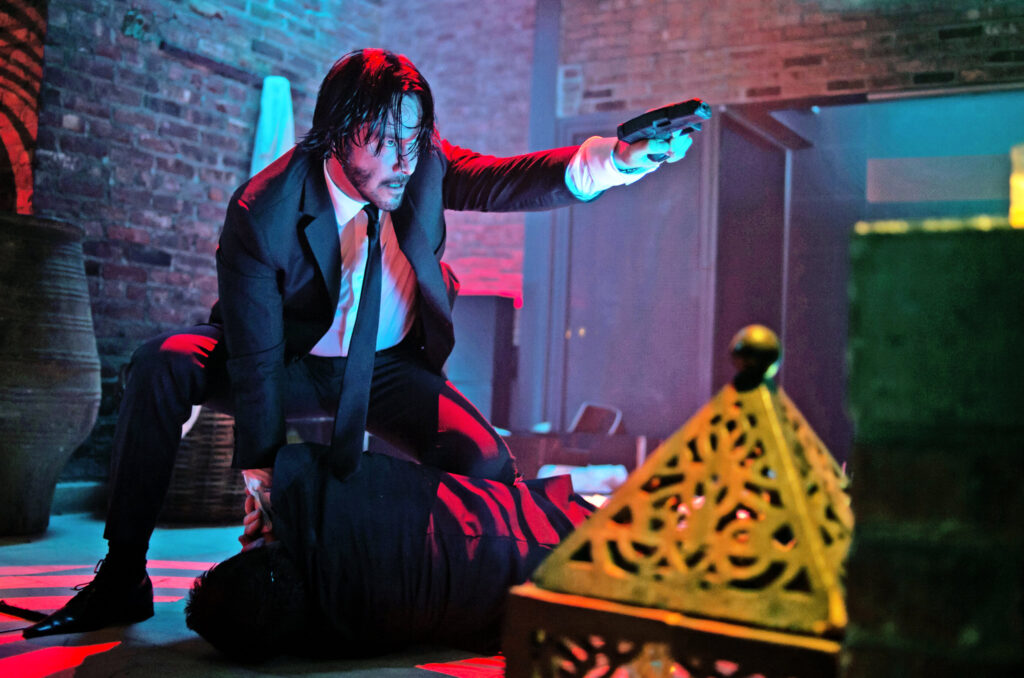
Initially, no distributor was interested. Lionsgate was the only bidder, and even they considered it a straight-to-video release. Luckily, they pivoted to a theatrical run. The title was changed from Scorn to John Wick during production because Reeves kept referring to it by that name. The DGA ultimately ruled that only one director could be credited, so Stahelski received directing credit while Leitch took a producer credit.
John Wick opened in October 2014 to strong reviews (86% on Rotten Tomatoes). Critics praised Reeves’ comeback, the supporting cast (especially Nyqvist and McShane), and the clean, brutal, choreographed action. The lack of shaky cam stood out in a sea of imitators. It debuted at #2 at the box office and ultimately earned $86 million worldwide — a solid return for a modestly budgeted, R-rated action film.
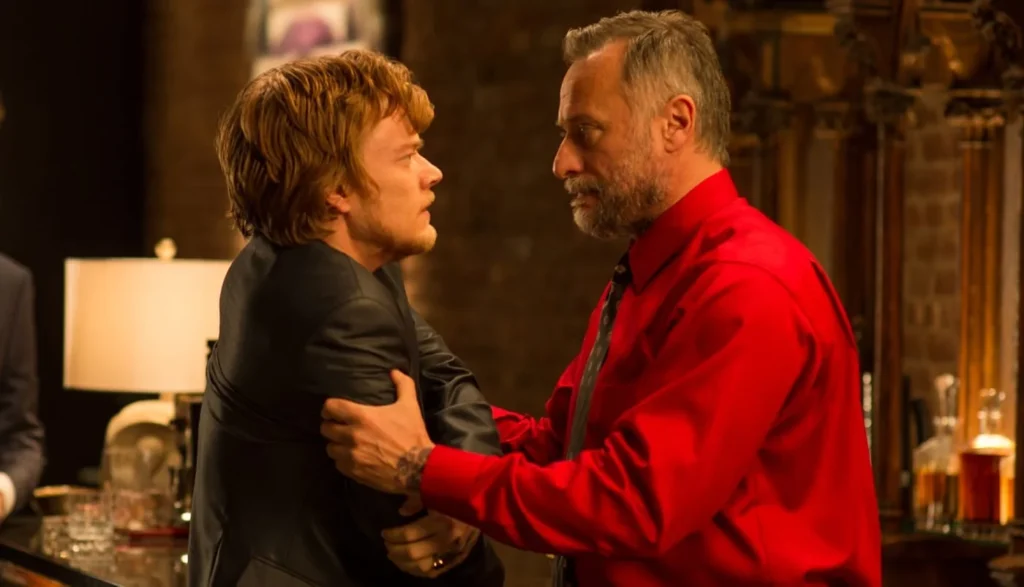
I first heard of John Wick when I was a sophomore in high school. I don’t recall seeing a trailer in theaters, but I do remember the constant TV ads — especially one looping while I was home sick, using that bold title banner across the top of the screen. I checked the Rotten Tomatoes score on Flixster (remember that app?) and was shocked to see how high it was. Once it came to DVD, I rented it from Redbox and watched it with my dad and brother. I was stunned by the violence, but I genuinely enjoyed it — and thought it would be a one-off.
Over the years, I’ve rewatched it ahead of each new entry, and I’m always struck by how fully realized the characters are — especially Wick and Winston. The Continental is an inspired idea, serving as neutral ground in a world of assassins. Kolstad gives us just enough mythology to spark curiosity, without overexplaining. And the action? Brutal, stylish, balletic. It’s amazing that a modest revenge story, powered by five key creatives (plus 17 producers!), grew into one of the most iconic action franchises of our time.
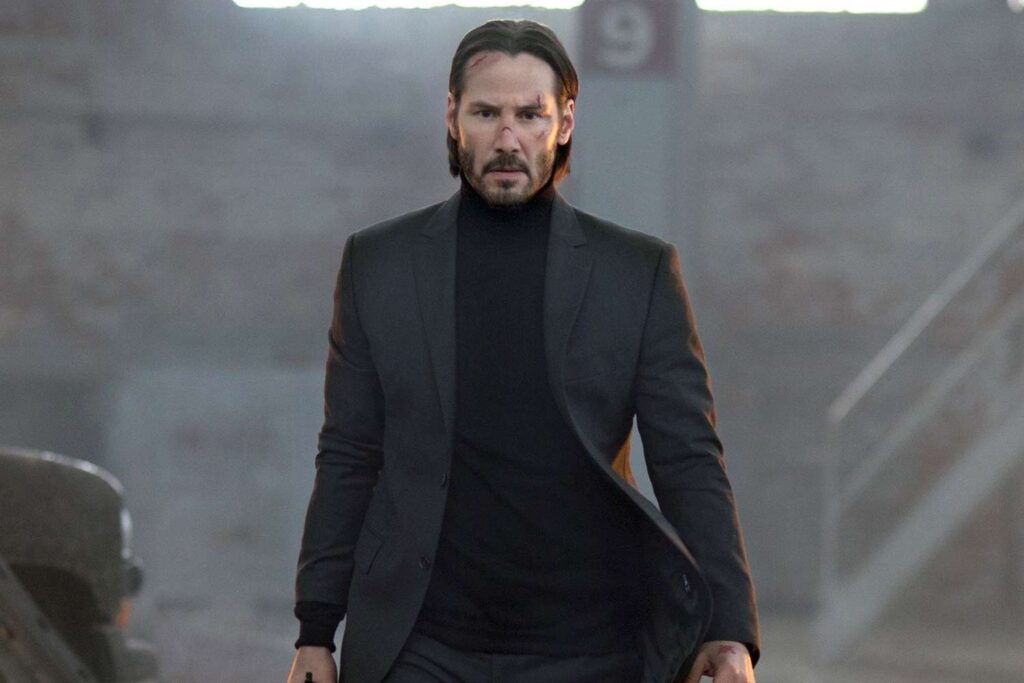
It might sound cliché, but I really do believe John Wick is a miracle of modern action filmmaking.