Today, I want to discuss a film franchise that brings me pure, unadulterated enjoyment: Back to the Future. I will be sharing my thoughts on the trilogy as a whole, but exploring each film individually. Let’s get started.
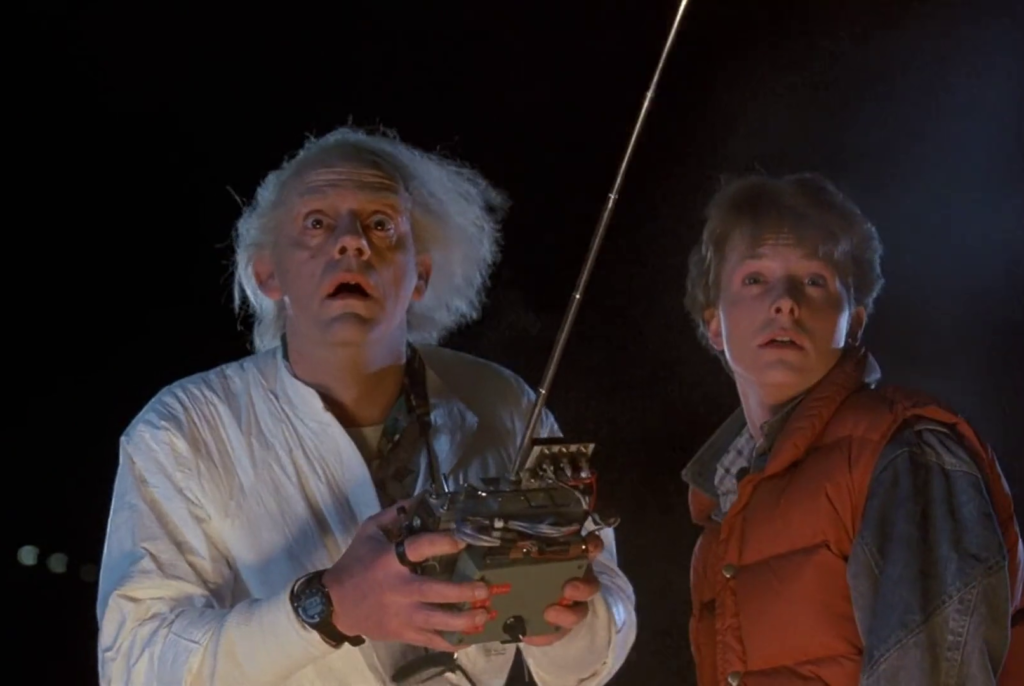
One of my favorite things after watching a movie for the first time is to read the IMDb trivia and visit the Wikipedia page. I enjoy reading about a film’s production and learning all I can about the journey from inception to the screen. The film we saw on screen could have vastly differed from the final project. I get fascinated learning about all the individual events and circumstances throughout a film’s development that shape it into the film we’ve come to know. The development of Back to the Future is full of these individual circumstances. It blows my mind to think of all the things that could have gone wrong, for lack of a better term. To better understand what I’m talking about, we need to go back in time (sorry, I couldn’t resist) to 1980. Now, full disclosure, this is all information you can find online. If you’ve been following my blog, you know I enjoy filling you in with any backstory and relevant behind-the-scenes stories, but I want to stress that this is NOT a research paper. With that out of the way, let’s continue.
The film was the brainchild of writer/director Robert Zemeckis and writer/producer Bob Gale. According to Zemeckis, the catalyst for the idea came after the release of the duo’s first film Used Cars. When Gale was visiting his parents, he came across his father’s high school yearbook, prompting him to wonder if he would have been friends with his father in high school. They developed the time travel idea and sold the pitch to Columbia Pictures and after two drafts, the studio decided not to go through with the project. The film was rejected by several studios for not being risque enough (Animal House and Porky’s were recent hits) and was also turned down by Disney who thought the idea of a mother falling for her son was too risque for their brand.
Descriptions of the early drafts sound like a combination of ideas two middle schoolers through together. Instead of the time machine as a DeLorean, the time machine was a stationary object Marty drove through a nuclear explosion and was also powered by Coca-Cola, somehow. Additionally, Doc Brown was a video pirate (not sure how that would have worked), and his beloved dog, Einstein, was instead a chimpanzee. The only person who saw potential in the screenplay was Steven Spielberg, who helped them refine the script. It was only after Zemeckis’ next film, Romancing the Stone, was an unexpected hit, that Universal gave the film the green light.
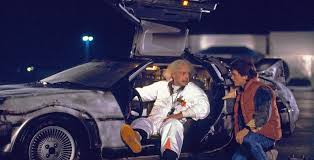
Michael J. Fox is synonymous with the role of Marty McFly, however, he almost wasn’t. It is fairly well known at this point that Fox wasn’t initially cast as Marty. The producers wanted him from the start but was unable to be cast due to his commitment to Family Ties. Due to his success on the show and the fact that Fox was carrying more of the weight due to his costar Meredith Baxter being on maternity leave, the show’s creator, Gary David Goldberg, did not even show him the script. Impressed with his performance in Mask, the producers turned to their second choice, Eric Stoltz. Filming began with Stoltz in late November 1984, but by early January 1985, Stoltz was let go. Zemeckis and the producers reviewed the footage and determined he was miscast. Stoltz allegedly went full method actor, staying in character in between shots, and brought dramatic energy to the role instead of the screwball comedy the filmmakers envisioned. They then went back to their first choice: Michael J. Fox. By this time, Baxter had returned from maternity leave and Goldberg allowed Fox to do the movie with the understanding that the show was the top priority. Fox and the filmmakers agreed. He would film Family Ties during the day and Back to the Future at night. An exhausted Fox kept this up until Family Ties went on their summer hiatus in April. For an extra $4 million and a loss of 34 shooting days, the filmmakers finally got their first choice. You can view some of the original Stoltz footage here.
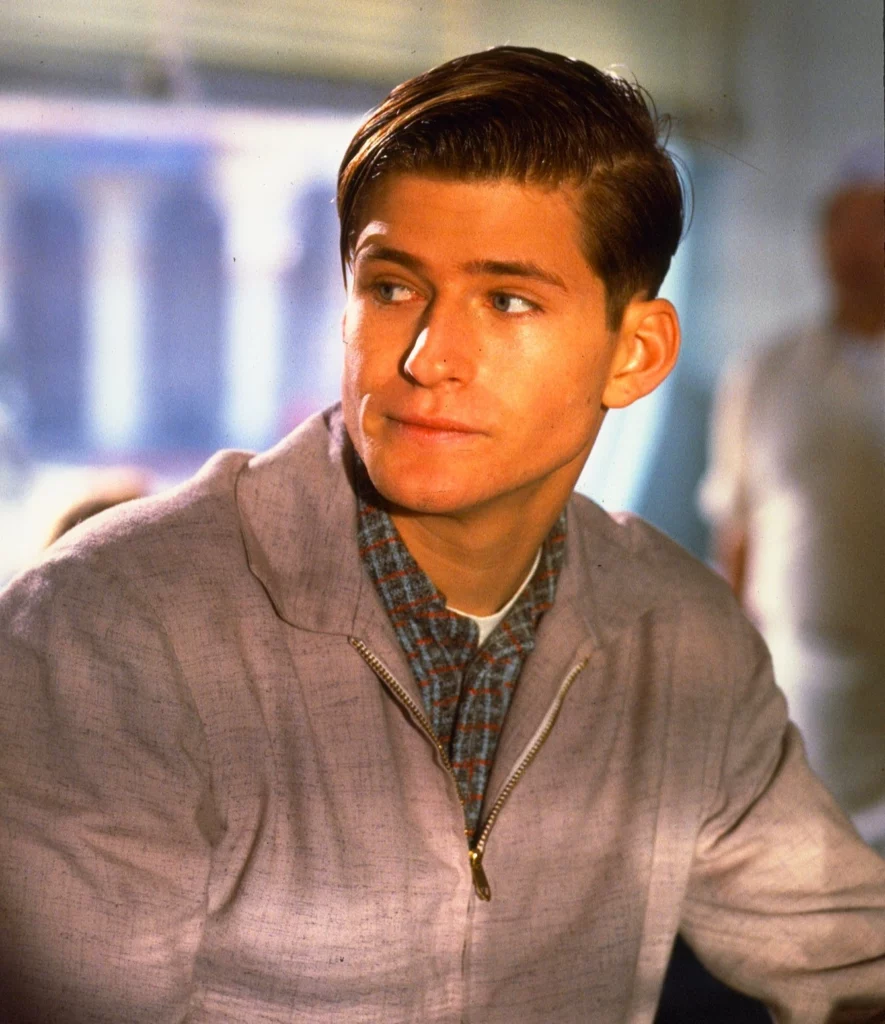
From a screenwriting standpoint alone, this film stands out to me. Being able to juggle all the setups and pay-offs is impressive. I would have to rewatch the film intently or find a comprehensive online listing because there are so many. The ones that come to mind are Lorraine telling her kids in 1985 that she met George because her dad hit him with a car. Of course, when Marty goes back to 1955, he pushes George out of the way, getting hit himself and messing up their first encounter. Hell, the first scene in the movie is all set up. Without even seeing Doc Brown in person (just his messy home) we know he has a dog named Einstein, he has stolen plutonium, and he’s been gone for a long time.
The most significant setup, however, is the clock tower. About ten minutes into the movie, an old lady interrupts Marty and Jennifer (Claudia Wells), explaining that thirty years ago, lightning struck the clock tower and it was out of commission. He’s given a flyer with information about the lightning strike, but like any teenage boy, only keeps the document because his girlfriend wrote her number down. This seems like an arbitrary, almost forgetful event. The payoff, of course, comes when Doc Brown laments that the only thing powerful enough to generate the 1.21 gigawatts of power required to send Marty home is a lightning strike. Nobody knows where and when lightning will strike – unless you’re Marty. Another small but subtle setup and payoff I appreciate is the name of the mall. When Marty meets Doc, it’s called Twin Pines Mall. After Marty travels to 1955 and destroys one of Mr. Peabody’s twin pines, the mall is renamed Lone Pines Mall upon his return.
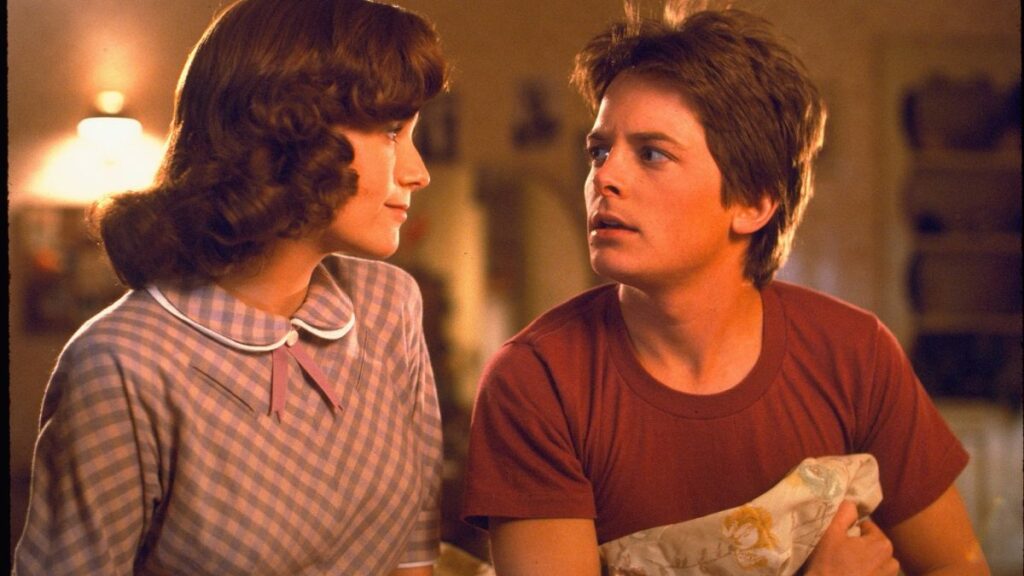
Let’s touch on the other aspects of filmmaking. The film plays like a screwball comedy with moments of suspense. What I appreciate about the humor is that it is not over the top. There’s the humor involved in Marty being a fish out of water. His stylish 1985 outfit resembles a life preserver, he can’t get a “Tab” at the cafe without first ordering something, but he can’t get a Pepsi Free. As the cafe owner tells Marty, “If you want a Pepsi, you’re gonna pay for it!” Other moments of levity include Doc Brown apologizing to Marty for the crudeness of a rather complex scale model of the town or Biff confidently telling Marty to “make like a tree and get outta here!” Perhaps the most iconic scene in the movie is where Marty’s mother (the teenage version) is tending to him in bed. She keeps calling him “Calvin,” only for him to discover that she has removed his jeans and assumed his name was “Calvin Klein” because it was written all over his underwear. My favorite joke is when the lead singer of the Marvin Berry band calls his cousin Chuck and tells him that he may have just found the new sound he was looking for while holding up the phone as Marty plays “Johnny B. Goode.” “It’s your cousin. Your cousin Marvin. Marvin Berry!” That line always makes me chuckle.
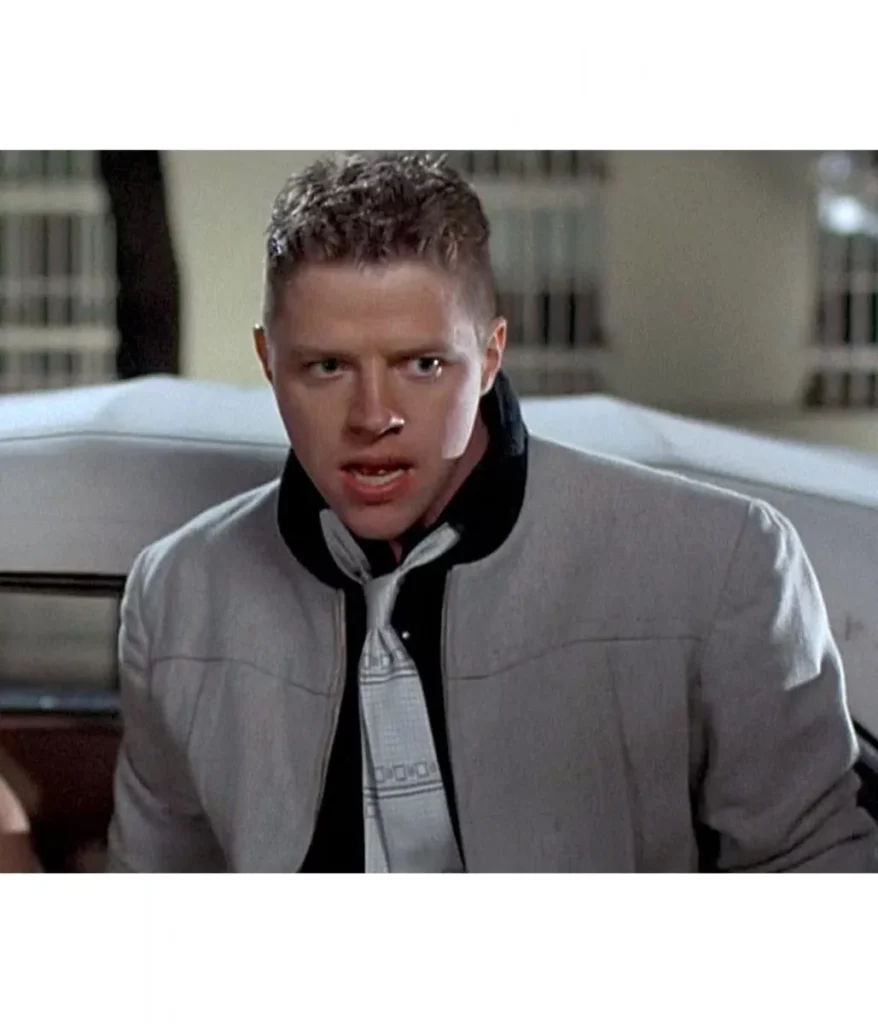
As mentioned, these moments of comedy are balanced out with suspense and thrills. It’s a thrill to see George punchout Biff. It’s exhilarating to finally see Marty go back in time after so many close calls. It’s a power keg of humor and excitement that is amplified by Alan Silvestri’s iconic score. I wish the film had received more Academy love. I do appreciate that Gale and Zemeckis’ script was nominated for Best Original Screenplay. It did lose to Witness, a more serious, but still powerful film. This may be a divisive statement to some, but part of me does wish the film had been left alone. If it were a stand-alone film, I believe it could be considered perfect. That being said, despite the fact they are not quite up to par with the original, the sequels are a blast.
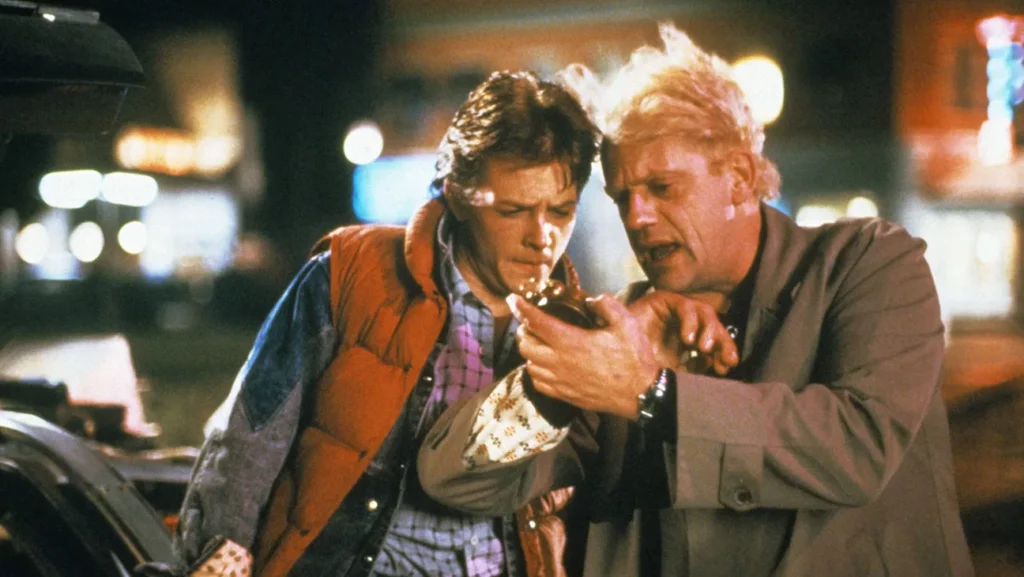
May 25, 2024: One of the best purchases I’ve made within the past year was a subscription for a season pass to my Alamo Drafthouse. This is not a sponsorship, I just love this pass. For only a two-dollar ticketing fee, I can see as many movies as I want per month, up to one a day. This includes re-releases. I’ve made it a point this year to go to as many re-releases of classic movies as I could. Starting tonight, over the next three Sundays, they were screening the Back to the Future trilogy. Tonight was the first installment. I can say, without hesitation, tonight was my best experience in a theater. It was a full house, which can be a double-edged sword. I did have to sit directly next to someone and share a table, but the person was quiet and didn’t take up more than his share of the common space. The crowd was energetic. They clapped when George knocked out Biff and when Marty finally got back to the future. The feeling was electric. No other film experience was comparable. As I was leaving, I heard a father and son walking behind me. The son could not have been more than eight or ten years old. The father asked his son, “Do you see why this is one of my favorite movies?” The son replied, “Yeah, I think this is one of my favorites now too.” I swear my heart could have melted. That’s a good dad!