
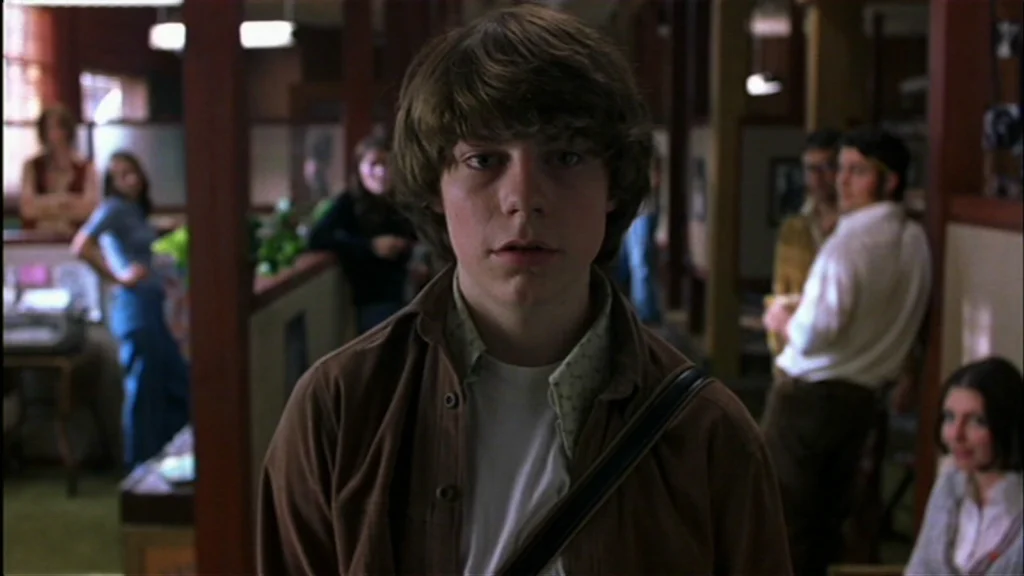
Today, I want to talk about a film that is near and dear to my heart, Almost Famous. The film stars Patrick Fugit as William Miller (a surrogate for Cameron Crowe), a fifteen-year-old journalist who gets to join the band Stillwater on their 1973 world tour, while writing a piece on them for Rolling Stone Magazine. Aside from Fugit, the film has an ensemble cast that includes Billy Crudup, Frances McDormand, Jason Lee, Philip Seymour Hoffman, and Kate Hudson. The film is semi-autobiographical, as writer/director Cameron Crowe was once a teenage journalist. As I dive in, I want to reiterate that a spoiler alert is in effect.
Let’s talk about Cameron Crowe. As mentioned, the film is semi-autobiographical. When Crowe was sixteen, he went on the road with The Allman Brothers Band and wrote his first cover story about the band. Because he was younger and into hard rock, he got the assignments to interview the bands that the older writers hated. Frequent bands he wrote about were Yes, Led Zeppelin, Jackson Browne, Rod Stewart, Fleetwood Mac, and The Eagles. In 1977, Crowe stayed behind when Rolling Stone moved offices to New York from California. He had the idea to go undercover as a high school student and write about his experiences, an idea he could actually pull off, given his youthful looks.

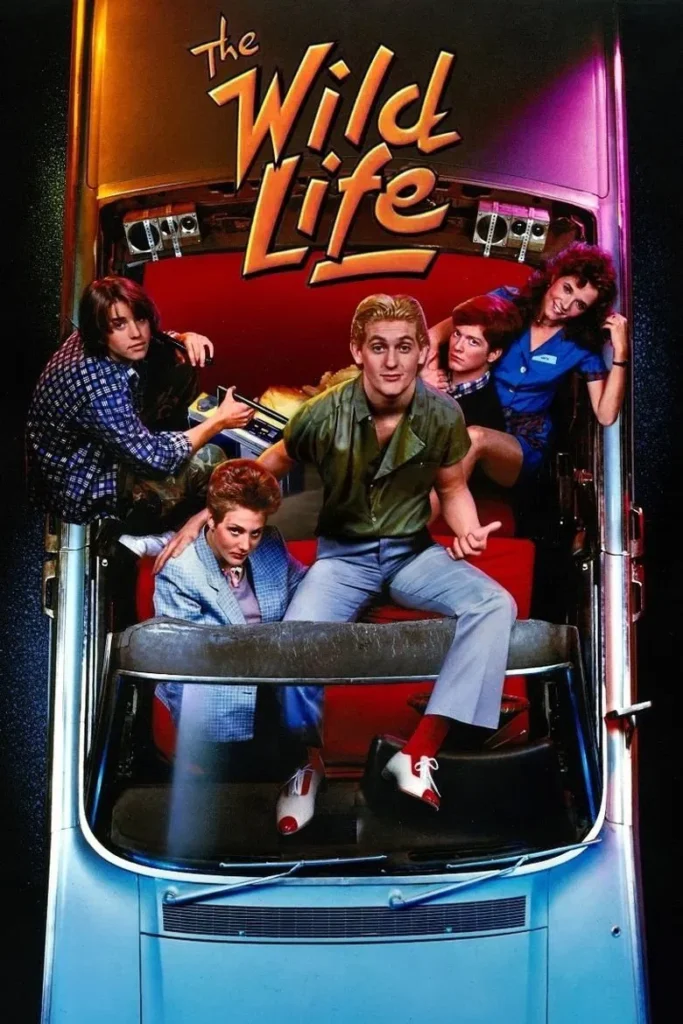
The book was called Fast Times at Ridgemont High. Released in 1981, the book followed the lives of six different characters and how their adolescence shaped them. Before the book was published, Universal Pictures had optioned it. The film version was released in 1982 and starred Sean Penn, Judge Reinhold, Phoebe Cates, and Jennifer Jason Leigh. The film was a sleeper hit that gained a better reputation with age. Crowe wrote the screenplay, starting his Hollywood career. Fresh off the success of Fast Times, Crowe wrote and produced The Wild Life, which is about teenagers’ lives after high school. The film starred Chris Penn (Sean’s brother), Lea Thompson, Ilan Michael-Black, and Rick Moranis. Many considered the film a spiritual sequel to Fast Times, but it did not live up to the success of its predecessor. The two films did get the attention of Academy Award winner James L. Brooks, who noticed Crowe’s distinct voice and wanted to work with him.


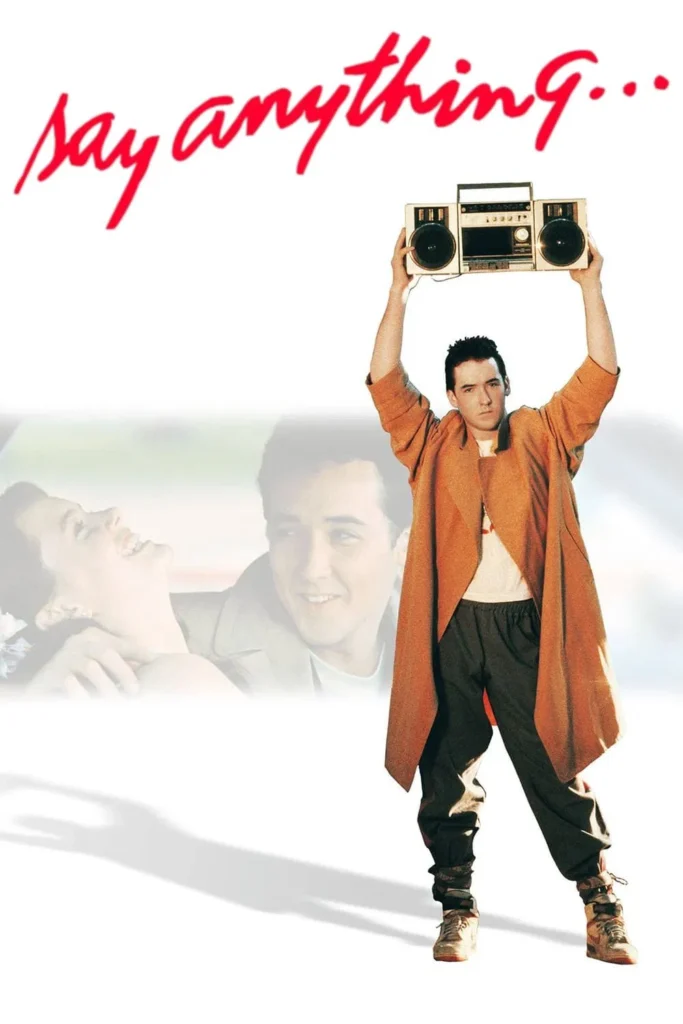
Brooks and Polly Platt produced Crowe’s first film as writer/director, 1989’s Say Anything. The film follows the romance between Lloyd Dobler (John Cusack), an average student, and Diane Court (Ione Skye), the class valedictorian, immediately after they graduate from high school. It is often considered one of the greatest teen movies of all time. The film, of course, is famous for the scene in which Lloyd tries to win back Diane by holding a boombox over his head while Peter Gabriel’s “In Your Eyes” plays. Crowe followed up Say Anything in 1992 with Singles, a film about six friends struggling through their mid-twenties. The film also had an ensemble cast that included Matt Dillon, Kyra Sedgwig, Bridget Fonda, and Bill Pullman. It was a moderate critical and commercial success, but didn’t match the acclaim of Say Anything. Crowe’s next movie would take four years to end on the screen, but it would be his biggest. Released in 1996, Jerry Maguire follows the titular sports agent (Tom Cruise) who is fired after he has an epiphany, and must hold on to the one client he has remaining (Cuba Gooding Jr.), while also falling for a single mother (Renee Zellweger). The film was nominated for five Academy Awards, including Best Actor for Cruise and Film Editing, and Crowe was nominated for Best Original Screenplay. Gooding Jr. won the Oscar for Best Supporting Actor.

After the massive success of Jerry Maguire, Crowe decided to mine his experiences writing for Rolling Stone as his next project. Crowe made the band Stillwater, which welcomes William with open arms, a composite of many different bands. Seventies rocker Peter Frampton helped to add to the film’s authenticity by signing on as a technical consultant. Crowe and his then-wife, Nancy Wilson (of the band Heart), wrote three of the five songs for Stillwater, which were used in the film. Frampton wrote the remaining two.


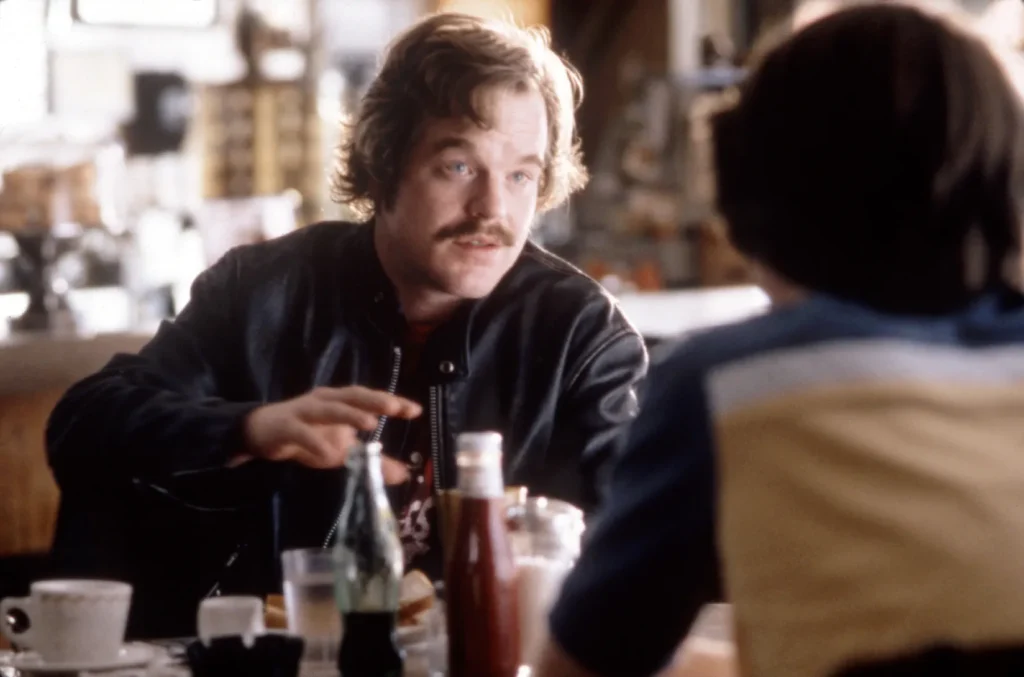
Additionally, many characters are based on real individuals or are composites. Penny Lane (Kate Hudson) is allegedly based on real-life Pennie Lane Trumbull and her group of female promoters who called themselves the “Flying Garter Girls Group”. The character of William Miller’s mother, Elaine (Frances McDormand), was based on Crowe’s mother, who even showed up on the set to watch him while he worked. Although he asked his mother not to bother McDormand, the two women got along well. Real-life Rolling Stones editor Ben Fong-Torres and magazine co-founder Jann Wenner are characters in the film. Most notably, Philip Seymour Hoffman plays the real-life Lester Bangs, a music journalist who takes William under his wing.


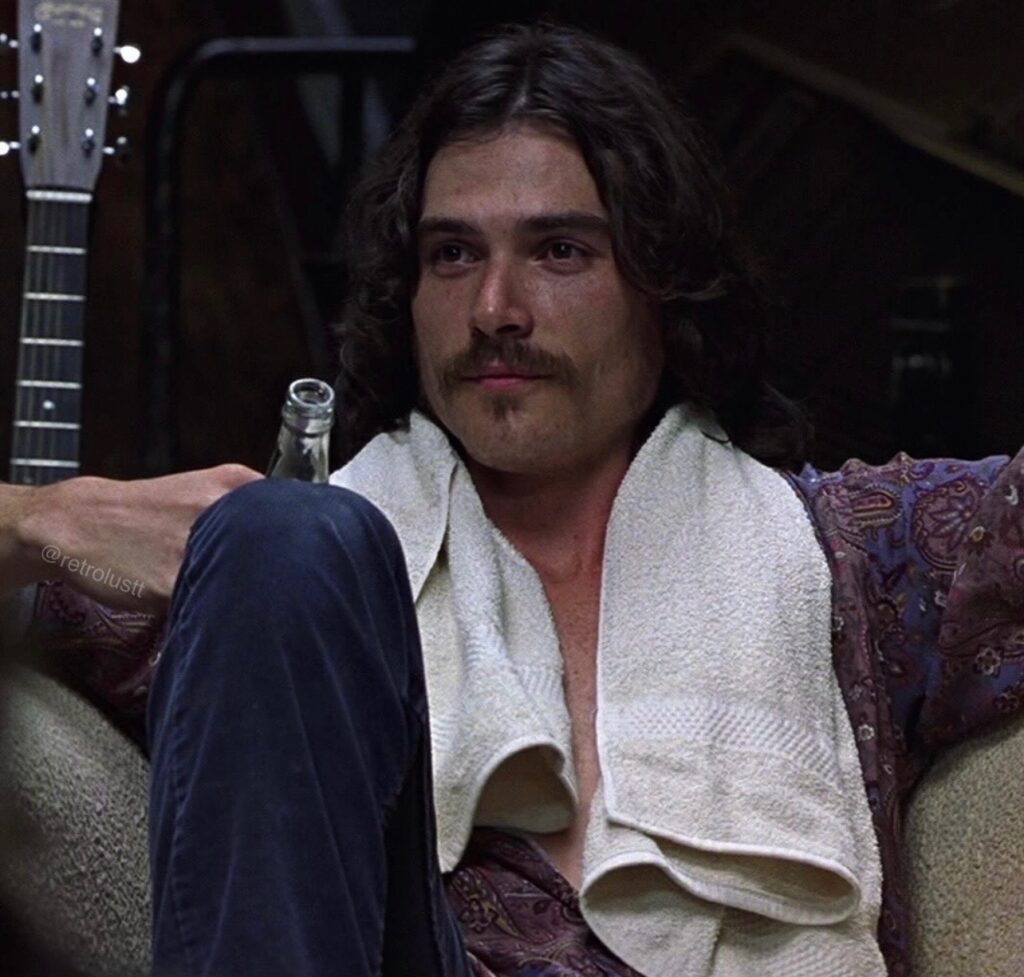
Very few films are this perfectly cast. Billy Crudup plays lead guitarist Russell Hammond. Brad Pitt was initially cast, but he and Crowe mutually decided before filming that he wasn’t right. When Pitt was still attached, Sarah Polley was set to play Penny Lane, but she dropped out when Pitt left and was replaced by Kate Hudson. Despite not being Crowe’s first choices, I believe both exceed any expectations placed upon them. As William’s overbearing mother, Elaine, Frances McDormand is pitch-perfect. She blends the right amount of love and neuroses into her performance. Meryl Streep was allegedly considered for the role of Elaine, but I couldn’t imagine anyone but McDormand for the part. Jason Lee, as someone I’ve admired for his roles in Chasing Amy, The Incredibles, and My Name is Earl, is the right amount of excited and petty as the jealous lead singer, Jeff Bebe. Philip Seymour Hoffman completely embodies the part of Lester Bangs. Knowing that both men would eventually die of drug overdoses is an unfortunate coincidence.

Noah Taylor as Dick, the band’s manager, and Anna Paquin and Fairuza Balk as Band-Aids, Polexia, and Sapphire round out the supporting cast. A young Zooey Deschanel as William’s caring and rock and roll obsessed sister, Anita, brings compassion to the role, making me wish I had a big sister as cool as her. It’s also jarring to see a young Jimmy Fallon (fresh off his first season of SNL) sporting a beard, glasses, and a 1970s haircut, playing the band’s new manager, Dennis Hope. This was during the era before Taxi and Fever Pitch, when Fallon still had potential for a movie career. It also makes me laugh because one of the first things he says when he meets Stillwater is that “everyone holds on to their roots. It’s good to have roots.” He uses the word “roots” three times in a row. Of course, who is his late-night band? The Roots. Of course, I can’t leave out Patrick Fugit as William. According to Crowe, he was one of the last actors cast. Late in the process, casting director Gail Levin got a self-made audition tape from 15-year-old Fugit, “a complete unknown from Salt Lake City” (Crowe’s words). Other soon-to-be famous actors that made minor appearances in this film include Pauley Perrette (NCIS), Eric Stonestreet (Modern Family), and Rainn Wilson (The Office).


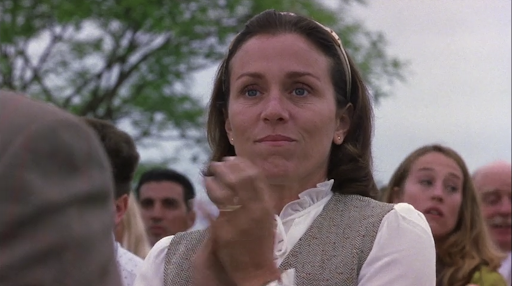
There are two performances I have to single out. The first is Frances McDormand as William’s mother, Elaine. From the film’s start, it’s clear that Elaine has big ambitions for her son. When we first meet Elaine and William, they walk down the boardwalk, discussing Aticus Finch from To Kill a Mockingbird. During this conversation, it is first revealed that Elaine is essentially grooming William to one day become a lawyer. She has undoubtedly high expectations for her children, which leads to frequent clashes with her daughter, Anita. In one argument, Anita reveals that her mom has gone to extremes, including banning white bread, butter, flour, and celebrating Christmas on a random day in September, where it wouldn’t be commercialized. Most notably, Elaine bans rock music from the house. When Anita tries to sneak in a Simon & Garfunkel album, Elaine catches her. Anita tells her that Simon & Garfunkel is poetry. “The poetry of drugs and promiscuous sex,” Elaine responds, without missing a beat. “Look at their eyes, they’re on pot.” Things get so bad between the mother and daughter that Anita moves out, leaving her and William alone. Before she departs, she leaves William a gift of records, spawning his obsession with rock and roll.


Elaine is an academic. We learn when she tells a sign painter, “I’m a teacher. X-mas is not a word. It’s either Merry Christmas or Happy Holidays.” In a humorous scene, much to William’s horror, she reveals that he is eleven, two years younger than everyone else in his grade. William knew she had started him a year earlier, but had no idea she had skipped him forward a grade. “There’s too much padding in school,” she tells him. “I taught fifth grade. It’s unnecessary.” When the film moves forward to 1973, William is a fifteen-year-old high school senior. Her plan for William to become a lawyer and the country’s youngest lawyer is still on track. Only because he agrees to these “delusions,” Elaine drives him to concerts to interview bands. Despite her strong reservations, she surprisingly lets William go on the tour with Stillwater, so long as he doesn’t miss any tests. As the film progresses, it becomes evident that her overbearing behavior comes from genuinely loving her children. She laments, “I’m a teacher, why can’t I teach my kids?” and “Why have I driven my kids so far away? Was I that bad?” She’s always willing to go into mama bear mode. In one of the most critical scenes in the film, William is on a payphone when Russell jokingly takes the phone and starts talking to Elaine. She tears him to size and threatens to track him down if he corrupts or hurts her son. The scene ends with her yelling to William over the phone, “I love you,” before the camera pulls back to reveal her alone in an empty house.

The next performance is perhaps the film’s most iconic, with Kate Hudson as Penny Lane. After all, it’s a close-up of Penny, in her fur jacket and sunglasses, that is featured prominently in the film’s poster. Aside from quite literally being the face of the film, Penny is also the most unique. For instance, don’t you dare call Penny a “groupie”. She will be the first to tell you she is a “band-aid.” What’s the difference, you may ask? According to Penny herself, groupies sleep with the band. “We don’t have intercourse with the band. We’re here for the music,” she tells William. As the film goes along, we learn that’s not entirely true. Although Penny claims they are there strictly for the music, she finds herself sleeping with Russell throughout the tour and falling in love with him. Regardless, other band-aids like Polexia, Sapphire, and Estrella look up to her. She’s the first one to embrace William within the music world, very much becoming his guide through the craziness of that world. In a way, William has two mentors. He has Lester Bangs on one shoulder, helping him navigate the world of professional journalism, and Penny, guiding him through the world of music.
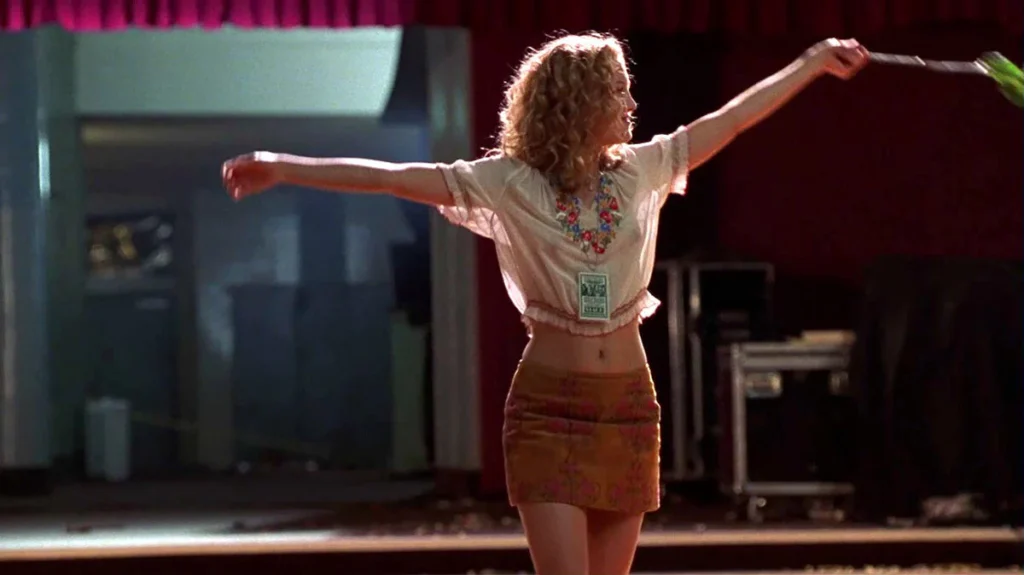
In a film full of compelling characters, at least to me, Penny is the most convincing. She’s the least fleshed out of the characters, but oddly, that makes her the strongest. I know that doesn’t quite make sense. In other words, she’s an enigma. Penny has lived a lot of life for someone as young as her. She could be anywhere from sixteen to eighteen years old, if you believe her. Her charisma, dare I say seductiveness, works to her advantage. She can make friends with anyone she meets and lights up any room she walks into. Her “fatal” character flaw is that she cares about people too much and attracts people to her. She knows the rules of the road for someone who has been around as long as she has. She knows what happens on the road stays on the road because people back home have wives and girlfriends. It comes off to me that she tries to protect herself by keeping so many secrets, but she lets her guard down and develops feelings for Russell. Whether she knows it or not, William develops feelings for her, which makes it harder for him to interview Russell, knowing that Penny is in love with him. Ultimately, it’s her character flaw that saves her. William, still in love with her, ends up saving her life after an incident with quaaludes.

She tries very much to shield herself from the pain of the outside world by putting on this facade of being impervious to pain. William is disgusted when Dick “sells” Penny and the other band aids for $50 and a case of Heineken to the band Humble Pie. When William tells her about the transaction, her first instinct is to ask, “What kind of beer?” She laughs about the transaction to avoid crying. After saving her life, Penny opens up to William, telling him her real name and other things nobody else knows. Although William does love her, they become friends. Each one is doing the other a solid. In one of the film’s most intense and funniest scenes, the band is flying above the Midwest when an electrical storm hits. Jeff and Russell, in particular, get into a heated argument before everyone joins in. It’s revealed that Jeff and Russell have slept around with many of the band’s significant others. Dennis Hope (Jimmy Fallon) admits to a hit and run in Dearborn, Michigan, and the drummer, who has remained silent throughout the film, yells, “I’m gay!” Of course, the plane returns to safety right after this announcement.

During the argument, even William jumps in after they refer to Penny as some “groupie.” William, for the first time, stands up to the band. He blasts them for sending her away. They always talk about performing for the fans and that she was their biggest fan, and they sent her away so she wouldn’t be around their girlfriends. Penny ultimately returns this favor near the end of the film. Russell calls Penny, asking her to come over and talk. Penny gives him an address, only to discover that she sent him to William’s house. Upset and betrayed by the band for lying to the magazine about the authenticity of his story, William lies in bed in a depressed state. Russell agrees to contact Rolling Stone and tell the truth while agreeing to an interview. The scene ends with William asking Russell, “What do you love about music?” “For starters,” he responds. “Everything.”

For a film about rock and roll in the 1970s, you wouldn’t be surprised to know that the soundtrack and film itself are stacked with popular artists, including Simon & Garfunkel, Rod Stewart, Cat Stevens, The Who, and Led Zeppelin. In fact, $3.5 million of the film’s $60 million budget alone went toward securing music rights. I believe the best use of an artist’s music belongs to Elton John. Of course, there is the “Tiny Dancer” sequence. After a rough night of fighting between Jeff and Russell, William follows Russell to a party, where, after taking acid, he jumps from a rooftop into a pool, shouting, “I am a golden God!” When the tour bus arrives to collect Russell, the whole band is pissed. As the bus drives away, “Tiny Dancer” fades in on the soundtrack and radio. One member of the crew begins to sing along. Then another joins in, and then another, before the whole bus sings along. All the tensions between Russell, Jeff, and the band seem to melt away. There’s a great line in this sequence where William tells Penny he has to go home. Penny tells him, “You are home.” That line sums up the entire film.

Another great sequence involving Elton John’s music plays closer to the film’s end. The band and the crew are in a restaurant with everyone’s wives and girlfriends. They are in high spirits because William has just announced that they will be on the cover of Rolling Stone. At the bar is Penny, whom William warned should not come to New York after she was “sold” to Humble Pie for $50 and a case of Heineken. She and Russell exchange glances, something Russell’s girlfriend notices. She asks about Penny and if she’s with anyone. More than one person responds, “She’s with me.” Dick then approaches Penny and tells her she has to leave. In broken spirits, she runs away. Angered that nobody in the band stuck up for her, he runs after her. He runs down a New York street, frantically checking cabs, before returning to the hotel room. In the hotel room, he finds her drunk, having taken a large dosage of Quaaludes. This occurs while John’s “Mona Lisas and Mad Hatters” plays. This was my first time hearing it as one of his lesser-known songs, but it was the best choice.

This segues perfectly because I want to mention the exquisite editing. It is excellent throughout the film, but this sequence is the most memorable. As William waits for a doctor, he dances with Penny, pronouncing his love for her. After all, he thinks, she’ll never remember. The film then cuts to William’s high school graduation ceremony, where Elaine is in the audience. The juxtaposition between William’s and Elaine’s priorities through editing is powerful. William is having the time of his life in music, a world of “compromised values,” as his mother would say. Elaine, even though William isn’t there, attends the ceremony because she wishes so badly that he would be there and she could see the fruits of her labor, so to speak; starting William in school early, skipping him forward an extra grade, and encouraging him with his studies. I can’t help but notice the symbolism there. Graduation is a landmark that signifies the start of adulthood. William misses his graduation because he’s living his life. In fact, he’s lived more life at fifteen than any of his classmates. It’s a perfect sequence. Although I will say, William looking at Penny romantically with Stevie Wonder’s “My Cherie Amour” playing while she gets her stomach pumped is odd. However, if that’s one of my only issues with the film, then so be it.

The film was released in September 2000 to critical and commercial success. Despite the acclaim, the film failed to recoup its $60 million budget, grossing only $47 million worldwide. I was actually shocked to learn this when doing my research. I knew the film wasn’t a blockbuster, but I had no clue it was a box office disappointment. Regardless, the film was nominated for four Academy Awards, including Original Screenplay, Editing, and Supporting Actress for Hudson and McDormand. The film took home only one award, Best Original Screenplay for Crowe. I do think the movie underperformed at the Oscars in general. Despite nominations for Best Picture from the Producers Guild of America and Best Director from the Directors Guild of America, the film failed to earn nominations in either category. Of the 2000 Best Picture nominees, I have not seen Crouching Tiger, Hidden Dragon, or Chocolat. Of the nominated films I have seen, Gladiator (the winner), Erin Brockovich, and Traffic, I thought this film was leaps and bounds better and would have been a deserving win.


Both Hudson and McDormand were excellent and deserving of a nomination. I would have been happy with a McDormand win, but she already had a win for Fargo (and would win three more), so that seemed unlikely. Hudson had the showier role, but received significant praise for her performance. She lost the Screen Actors Guild Award to Judi Dench for Chocolat, but won the Golden Globe for Best Supporting Actress. She was nominated as Best Lead Actress at BAFTA, which cost her the win at that ceremony. Going into the Academy Awards, Hudson had a strong chance of winning. However, it wasn’t her name that was called. It wasn’t Dench’s either. It was Marcia Gay Harden for Pollack, who surprised many, considering she hadn’t won or even been nominated for many precursor awards.

One of the reasons I love this film is that it’s so pure. Pure in its love for music. Cameron Crowe cares so deeply about music, evidenced in every frame. When young William finds the records under his bed, he studies the artwork and rubs his hands delicately across the cover. He acts in wonder and awe, a way that I doubt a young Crowe would have worked. When a filmmaker loves something and has a passion for telling a particular story, oftentimes, that passion comes through. Crowe’s passion for music comes through in spades. It’s a film that makes me happy every time I watch it.
Aside from being one of my favorite films of all time, it proved crucial in my development as a writer. I was fifteen years old and a freshman in high school when I first saw the film. I was the same age as William, and in a way, I lived vicariously through him. The idea of a fifteen-year-old getting to follow his dreams was something that I desperately wanted. I have no experience or knowledge about the film industry. Inspired by this film (and a little bit by the scope and characters of Boogie Nights), I set out to write my own coming-of-age film. I called it Freshman, and it was about a fifteen-year-old screenwriter who, through chance circumstances, was plucked from obscurity and hired to write on a TV show. From there, his career takes off, and he meets people who become his friends and people who will bring him down. I probably wrote this script on a Google Doc (formatted incorrectly, I’m sure), long before I had Final Draft. As of this writing, I have no desire to go back and read it. It’s not original, and I’m sure it’s beyond awful. I cringe when I read scripts I wrote a year or two ago. I’m sure going back and reading a script I wrote a decade ago as a fifteen-year-old would be excruciating.
I’m wrapping up here. I don’t know what else to say other than that I love this film. This is one of a few films in my top ten (along with Good Will Hunting) that could improve my mood. This is Cameron Crowe’s magnum opus, and I’m so thankful he made this movie. Thank you for reading. Until next time.